Criminal law
Guides on German residence permits, citizenship, work, and family law — in your language. Each article points to official statutes and is not a substitute for qualified legal advice.
10 results

Building a good and dignified life in a new country is not limited to learning the language and finding a job. Becoming familiar with the laws of that country is one of the most important aspects of adapting to a new society. One of the most fundamental laws in any country is criminal law. Its purpose is to define the boundary between lawful and unlawful behavior within society. Being aware of these laws helps individuals avoid actions that may be considered criminal and prevents them from unknowingly committing offenses. Migrants, more than others, need to understand criminal law, as certain violations—besides leading to criminal penalties—can negatively affect their residency status, work permit, or even their citizenship rights. Moreover, familiarity with these laws demonstrates respect for the host society and its legal culture, and it plays an important role in promoting peaceful coexistence. ⸻ German Criminal Code (StGB) In Germany, criminal law is known as the Strafgesetzbuch (StGB). This law was first enacted in 1871 and has been amended several times since then. The StGB consists of 358 sections and is divided into two main parts: General Part: covers the basic principles of criminal responsibility, types of punishments, and the conditions for their enforcement. Special Part: defines specific offenses such as theft, violence, cybercrime, forgery, sexual offenses, and terrorism. ⸻ Conclusion In this section, we have attempted to present, in the simplest possible way, the types of behavior that are considered criminal under German law, as well as the corresponding penalties, whether financial or custodial. It is important to note that the German Criminal Code is not merely a dry legal text, but rather a practical guide that helps us understand what kinds of behavior are acceptable in this country and which actions may have serious consequences. Studying this section is an important step for migrants toward social integration, increased legal awareness, and ensuring both personal and social security.

One of the important aspects of everyday life is controlling anger and avoiding physical confrontation when tensions arise with others. Governments also attempt to reduce the level of physical conflict in society and maintain public safety by criminalizing physical violence. In this article, we have aimed to familiarize you with the legal consequences of physical altercations in Germany based on the criminal law of this country. In German law, any harm caused to a person’s body or health is referred to as physical assault (Körperverletzung). Even a minor altercation that may not be considered serious in some countries can have severe legal consequences in Germany, and in addition to punishment, it may also affect a person’s residence status and future. ⸻ Section 223 – Simple Bodily Harm § 223 StGB „Wer eine andere Person körperlich misshandelt oder an der Gesundheit schädigt, wird mit Freiheitsstrafe bis zu fünf Jahren oder mit Geldstrafe bestraft. Der Versuch ist strafbar.“ Translation: Anyone who physically abuses another person or damages their health shall be punished with imprisonment of up to five years or a fine. Attempting to commit this offense is also punishable. When does this section apply? If you: Slap someone Push someone and cause pain or injury Hit someone during a fight Cause even minor physical pain Even if: The injury is very slight Your intention was only to scare the person Your action is still considered a crime. ⸻ Section 224 – Dangerous Bodily Harm § 224 StGB „(1) Wer die Körperverletzung durch Beibringung von Gift oder anderen gesundheitsschädlichen Stoffen, mittels einer Waffe oder eines anderen gefährlichen Werkzeugs, mittels eines hinterlistigen Überfalls, mit einem anderen Beteiligten gemeinschaftlich oder mittels einer das Leben gefährdenden Behandlung begeht, wird mit Freiheitsstrafe von sechs Monaten bis zu zehn Jahren, in minder schweren Fällen mit Freiheitsstrafe von drei Monaten bis zu fünf Jahren bestraft. (2) Der Versuch ist strafbar.“ Translation: (1) Anyone who commits bodily harm by one of the following means: By administering poison or other substances harmful to health By using a weapon or another dangerous tool By means of a deceitful or treacherous attack Acting together with another person Or by means of treatment that endangers life shall be punished with imprisonment from six months to ten years. In less severe cases, the punishment shall be imprisonment from three months to five years. (2) Attempting to commit this offense is also punishable. ⸻ When does this section apply? If you: Attack someone with a knife or any dangerous object Put medication, drugs, stimulants, or sexual substances into someone’s drink without their consent Attack someone as part of a group Attack someone suddenly or from behind Do something that puts another person’s life at risk All of these are considered serious crimes. ⸻ Section 225 – Abuse of Persons under Protection § 225 StGB „Wer eine Person unter achtzehn Jahren oder eine wegen Gebrechlichkeit oder Krankheit wehrlose Person, die seiner Fürsorge oder Obhut untersteht, quält oder roh mißhandelt oder durch böswillige Vernachlässigung seiner Pflicht, für sie zu sorgen, an der Gesundheit schädigt, wird mit Freiheitsstrafe von sechs Monaten bis zu zehn Jahren bestraft.“ Full Translation: Anyone who, in relation to a person under the age of 18 or a defenseless person due to illness or physical weakness who is under their care: Torments them Treats them with cruelty Or harms their health through malicious neglect of their duty of care shall be punished with imprisonment from six months to ten years. ⸻ When does this section apply? If you: Beat your child Harm your spouse or a dependent person Neglect a child or a vulnerable person under your care and cause harm Very important note: In Germany, physical punishment of children is a serious crime and has no justification. ⸻ Section 226 – Grievous Bodily Harm § 226 StGB „Hat die Körperverletzung zur Folge, dass die verletzte Person das Sehvermögen auf einem oder beiden Augen, das Gehör, das Sprechvermögen oder ein wichtiges Glied des Körpers verliert oder dauerhaft nicht mehr gebrauchen kann, wird der Täter mit Freiheitsstrafe von einem Jahr bis zu zehn Jahren bestraft. Verursacht der Täter eine der bezeichneten Folgen absichtlich oder wissentlich, so ist die Strafe Freiheitsstrafe nicht unter drei Jahren.“ Translation: If bodily harm results in the victim: Losing vision in one or both eyes Losing hearing Losing the ability to speak Or losing an important limb or permanently losing the use of it the offender shall be punished with imprisonment from one to ten years. If these consequences are caused intentionally or knowingly, the punishment shall be imprisonment of no less than three years. ⸻ When does this section apply? If during a conflict: A person’s eye is damaged A hand or leg becomes unusable The person suffers permanent disability This is considered a very serious crime with severe punishment. ⸻ Section 227 – Bodily Harm Resulting in Death (Körperverletzung mit Todesfolge) § 227 StGB „(1) Verursacht der Täter durch die Körperverletzung (§§ 223 bis 226) den Tod der verletzten Person, so ist die Strafe Freiheitsstrafe nicht unter drei Jahren. (2) In minder schweren Fällen ist auf Freiheitsstrafe von einem Jahr bis zu zehn Jahren zu erkennen.“ ⸻ Translation: (1) If the offender causes the death of the injured person through bodily harm (Sections 223 to 226), they shall be punished with imprisonment of no less than three years. (2) In less severe cases, the punishment shall be imprisonment from one to ten years. ⸻ When does this section apply? This section applies when: The offender did not intend to kill, But the victim dies as a result of the assault. Simple examples: In a fight, you push someone → their head hits the ground → they die You beat someone → they later die due to the severity of injuries The conflict causes internal injuries that later lead to death ⸻ Conclusion Although at any time and in any place disagreements, discussions, or even arguments may arise between you and members of your family or society, it is important at that very moment to consider the possible consequences of your actions. Could a physical confrontation—even unintentionally—lead to serious injury or the loss of a human life? Without a doubt, all of us may become angry, argue, or distance ourselves from others for a time; however, none of us wishes to harm others, nor do we want to cause the death or permanent injury of another human being—even if they hold beliefs or opinions different from our own. Therefore, the best approach is always to avoid any form of physical confrontation. In situations where disputes become severe and seem impossible to resolve, turning to the law and legal authorities is the safest and most rational way to handle the matter. ✔ Respect for the law ✔ Control of anger ✔ Choosing peaceful solutions These are the three fundamental principles for living a safe, calm, and successful life in a society such as Germany.

Introduction In everyday life, certain behaviors may be perceived by some individuals as “simple” or “normal,” yet under German law, the same behaviors can be considered criminal offenses. One of the most important of these is sexual harassment and any form of sexual conduct without the consent of the other person. In the German Criminal Code, Sections 174 to 184i are dedicated to sexual offenses. This part of the law is titled: Offenses Against Sexual Self-Determination (Straftaten gegen die sexuelle Selbstbestimmung) This topic is especially important for individuals working in fields such as kindergartens, schools, healthcare, or counseling services, as the law imposes greater responsibilities and stricter limitations on them. ⸻ Section One: Abuse of Authority and Trust § 174 StGB – Sexual Abuse of Persons Under Protection Legal Text (German): „(1) Wer sexuelle Handlungen an einer Person unter achtzehn Jahren vornimmt, die ihm zur Erziehung, Ausbildung oder Betreuung in der Lebensführung anvertraut ist, oder an sich von ihr vornehmen lässt, wird mit Freiheitsstrafe von drei Monaten bis zu fünf Jahren bestraft. (2) Ebenso wird bestraft, wer sexuelle Handlungen an einer Person unter achtzehn Jahren vornimmt oder an sich von ihr vornehmen lässt, die ihm im Rahmen eines Dienst- oder Arbeitsverhältnisses untergeordnet ist. (3) Der Versuch ist strafbar.“ ⸻ Translation: (1) Any person who performs sexual acts on a person under the age of eighteen who has been entrusted to them for education, training, or care in life, or allows such a person to perform sexual acts on them, shall be punished with imprisonment from three months to five years. (2) The same penalty applies if such acts occur within the framework of an employment or service relationship involving dependency. (3) An attempt to commit this offense is also punishable. ⸻ Explanation: If you are a caregiver, teacher, or responsible for minors, any sexual relationship or behavior with a person under your supervision is considered a criminal offense—even if that person appears to give full consent. ⸻ § 174c StGB – Sexual Abuse in the Context of Counseling or Treatment Legal Text (German): „Wer sexuelle Handlungen an einer Person vornimmt oder von ihr vornehmen lässt, die ihm wegen einer Beratung, Behandlung oder Betreuung anvertraut ist, und dabei die sich aus diesem Verhältnis ergebende Abhängigkeit ausnutzt, wird mit Freiheitsstrafe bis zu fünf Jahren oder mit Geldstrafe bestraft.“ ⸻ Translation: Any person who engages in sexual acts with someone entrusted to them for counseling, treatment, or care, and exploits the dependency arising from that relationship, shall be punished with imprisonment of up to five years or a fine. ⸻ Simple Explanation: Individuals working in service professions—such as healthcare or counseling—may be committing a crime if they engage in sexual relationships with their clients or patients. This provision typically applies when the client files a complaint, stating that the service provider proposed or attempted to initiate a sexual relationship. ⸻ Section Two: Children (Highly Important) § 176 StGB – Sexual Abuse of Children Legal Text (German): „(1) Wer sexuelle Handlungen an einer Person unter vierzehn Jahren vornimmt oder an sich von ihr vornehmen lässt, wird mit Freiheitsstrafe von sechs Monaten bis zu zehn Jahren bestraft. (2) Ebenso wird bestraft, wer eine Person unter vierzehn Jahren dazu bestimmt, sexuelle Handlungen an sich vorzunehmen.“ ⸻ Translation: (1) Any person who performs sexual acts on a person under the age of fourteen or allows such a person to perform sexual acts on them shall be punished with imprisonment from six months to ten years. (2) Likewise, any person who causes or encourages a person under fourteen to perform sexual acts on them shall be subject to the same penalty. ⸻ Explanation: This provision applies to everyone. Even if a 15-year-old minor attempts to engage in sexual activity with a child under 14, they can be prosecuted under this law. ⸻ Conclusion of Part One Abuse of professional position or the trust of others is considered a criminal offense. Children under the age of 14 are fully protected by law. Any sexual relationship with them—even if the child appears to consent—has no legal validity, and the older partner is considered a criminal and must be punished under the law. ⸻ Continue Reading in Part Two: Sexual Violence and Offenses in Germany (Part Two)
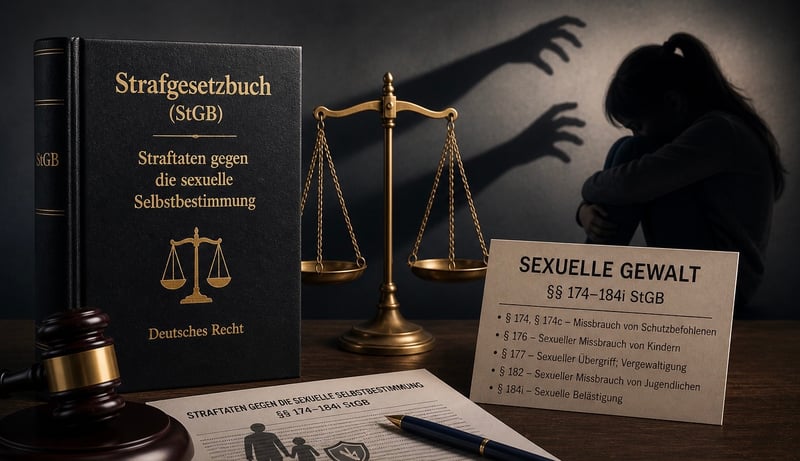
Rape, Sexual Harassment, and Legal Responsibilities Introduction This article is a continuation of Part 1. In this section, we address the most important sexual offenses that may occur in everyday life, including rape, sexual harassment, and behaviors carried out without consent. Section Three: Sexual Assault and Rape § 177 StGB – Sexual Assault and Rape Legal Text (German): (1) Wer gegen den erkennbaren Willen einer anderen Person sexuelle Handlungen an dieser Person vornimmt oder von ihr vornehmen lässt oder diese Person zur Vornahme oder Duldung sexueller Handlungen an oder von einem Dritten bestimmt, wird mit Freiheitsstrafe von sechs Monaten bis zu fünf Jahren bestraft. (2) Ebenso wird bestraft, wer sexuelle Handlungen an einer anderen Person vornimmt oder von ihr vornehmen lässt oder diese Person zur Vornahme oder Duldung sexueller Handlungen an oder von einem Dritten bestimmt, wenn der Täter ausnutzt, dass die Person nicht in der Lage ist, einen entgegenstehenden Willen zu bilden oder zu äußern, der Täter ausnutzt, dass die Person auf Grund ihres körperlichen oder psychischen Zustands in der Bildung oder Äußerung des Willens erheblich eingeschränkt ist, es sei denn, er hat sich der Zustimmung dieser Person versichert, der Täter ein Überraschungsmoment ausnutzt, der Täter eine Lage ausnutzt, in der dem Opfer bei Widerstand ein empfindliches Übel droht, oder der Täter die Person zur Vornahme oder Duldung der sexuellen Handlung durch Drohung mit einem empfindlichen Übel genötigt hat. (3) Der Versuch ist strafbar. (4) Auf Freiheitsstrafe nicht unter einem Jahr ist zu erkennen, wenn die Unfähigkeit, einen Willen zu bilden oder zu äußern, auf einer Krankheit oder Behinderung des Opfers beruht. (6) In besonders schweren Fällen ist auf Freiheitsstrafe nicht unter zwei Jahren zu erkennen. Ein besonders schwerer Fall liegt in der Regel vor, wenn der Täter mit dem Opfer den Beischlaf vollzieht oder vollziehen lässt oder ähnliche sexuelle Handlungen an dem Opfer vornimmt oder von ihm vornehmen lässt, die dieses besonders erniedrigen, insbesondere wenn sie mit einem Eindringen in den Körper verbunden sind (Vergewaltigung), oder die Tat von mehreren gemeinschaftlich begangen wird. ⸻ Translation: (1) Anyone who performs sexual acts on another person against that person’s recognizable will, or causes that person to perform such acts, or forces that person to perform or tolerate sexual acts with or by a third party, shall be punished with imprisonment from six months to five years. (2) The same penalty applies if a person performs sexual acts on another person or causes them to do so, or forces them to perform or tolerate sexual acts with or by a third party, if: 1. the offender exploits the fact that the person is unable to form or express a contrary will, 2. the offender exploits that the person is significantly limited in forming or expressing their will due to a physical or psychological condition, unless the offender has ensured that consent was given, 3. the offender takes advantage of a surprise situation, 4. the offender exploits a situation in which the victim would face serious harm if they resisted, or 5. the offender forces the person by threatening significant harm. (3) Attempting to commit this offense is also punishable. (4) A minimum sentence of one year imprisonment applies if the inability to form or express a will is due to illness or disability. (5) A minimum sentence of one year applies if the offender: 1. uses violence against the victim, 2. threatens the victim with immediate danger to life or physical safety, or 3. exploits a situation in which the victim is defenseless. (6) In particularly serious cases, the minimum penalty is two years of imprisonment. Such cases generally include: 1. sexual intercourse or similar acts that are especially degrading, particularly involving penetration (rape), or 2. offenses committed jointly by multiple perpetrators. (7) A minimum sentence of three years applies if the offender: 1. carries a weapon or dangerous tool, 2. carries tools to overcome resistance through force or threats, or 3. places the victim at risk of serious bodily harm. (8) A minimum sentence of five years applies if the offender: 1. uses a weapon or dangerous tool, or 2. seriously physically abuses the victim or puts the victim at risk of death. (9) In less severe cases: paragraphs (1) and (2): imprisonment from three months to three years paragraphs (4) and (5): six months to ten years paragraphs (7) and (8): one to ten years ⸻ Simple Explanation: If someone engages in sexual activity without the other person’s consent (or when the other person cannot give or express consent), it is a crime—even if the interaction initially began with consent. This law is not only about a clear verbal “no.” It also applies when: The person is unable to decide (e.g., intoxicated, drugged, or semi-conscious) The person is surprised or under pressure The person continues out of fear or threats The person cannot effectively express refusal ⸻ Example: Two people agree to engage in a sexual interaction (e.g., role-play or fantasy). During the interaction, one person: says “I don’t want to continue,” or shows discomfort and no longer consents If the other person continues despite this, it may constitute a crime under §177 because recognizable consent no longer exists. ⸻ Important Note on Sexual Fantasies: In relationships involving role-play or fantasies (e.g., BDSM): Consent must be clear, ongoing, and revocable at any time The use of a safe word is common Continuing after consent is withdrawn may be a criminal offense ⸻ Section Four: Adolescents § 182 StGB – Sexual Abuse of Adolescents Legal Text (German): „Wer eine Person unter achtzehn Jahren unter Ausnutzung einer Zwangslage oder gegen Entgelt zu sexuellen Handlungen bestimmt, wird bestraft.“ ⸻ Translation: Anyone who induces a person under 18 years of age to engage in sexual acts by exploiting a situation of coercion or in exchange for payment or benefits shall be punished. ⸻ Simple Explanation: This law protects individuals under 18. If someone exploits a young person’s vulnerability or offers money/benefits in exchange for sexual acts, it is a crime—even if the young person appears to agree. Key concepts: Exploitation of coercion: the person cannot freely refuse (e.g., fear, financial dependence) Payment/benefits: money, gifts, or advantages offered in exchange ⸻ Examples: An adult offers money to a 17-year-old for sex → crime An employer pressures a 17-year-old trainee → coercion and crime Offering financial help or gifts to a vulnerable minor for sexual acts → crime In all such cases, the adult may face imprisonment or fines under §182. ⸻ Section Five: Sexual Harassment § 184i StGB – Sexual Harassment Legal Text (German): „Wer eine andere Person in sexuell bestimmter Weise körperlich berührt und dadurch belästigt, wird mit Freiheitsstrafe bis zu zwei Jahren oder mit Geldstrafe bestraft.“ ⸻ Translation: Anyone who touches another person in a sexual manner and thereby harasses them shall be punished with imprisonment of up to two years or a fine. ⸻ Simple Explanation: This law concerns unwanted sexual touching. Even if the act is not severe, it can still be a crime if it causes discomfort or distress. ⸻ Examples: Touching someone’s body or buttocks without permission at a party Repeatedly touching a colleague with sexual intent Pressing one’s body or genitals against another person in a crowded place Touching someone on a date without their consent ⸻ Important Note: You must always be fully aware of the other person’s consent before any sexual contact. For example, if you are newly acquainted with someone, it is advisable that both parties are fully conscious and aware, so that consent cannot later be questioned under the law. ⸻ Important Warning for Migrants In Germany, sexual offenses are treated very seriously, and investigations are conducted quickly and sensitively. For migrants, consequences may include: Criminal record Loss of employment Rejection of residence or citizenship applications Deportation in serious cases ⸻ Final Conclusion For a safe and successful life in Germany: ✔ Respect others’ boundaries ✔ Always ensure clear consent ✔ Avoid any risky or questionable behavior Sexual violence and harassment have no cultural or social justification in Germany. Consent is the fundamental requirement of any sexual interaction, and violating it can lead to severe consequences. Therefore: ✔ Respect personal boundaries ✔ Obtain clear consent ✔ Avoid any unwanted sexual behavior These are three essential principles for a safe and lawful life in Germany.
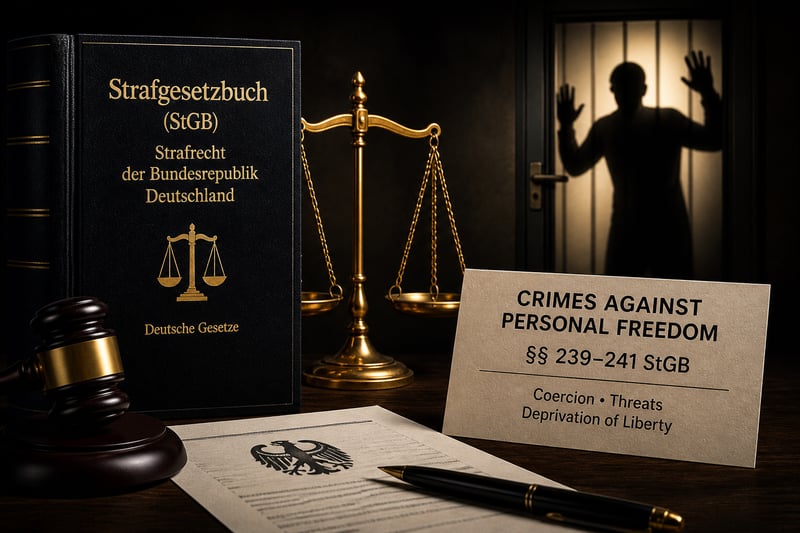
Threats, Coercion, and Deprivation of Liberty Introduction In everyday life, situations may arise where people try to pressure, threaten, or control others. While some may see these behaviors as “normal” or “personal matters,” under German law, many of these actions are considered serious criminal offenses. The German Criminal Code (Strafgesetzbuch – StGB) includes several provisions that protect individual freedom. These laws ensure that every person has the right to make decisions without pressure, fear, or force. This topic is especially important for migrants, as certain behaviors that might be tolerated in other cultures can lead to criminal charges in Germany. Section 1: Coercion § 240 StGB – Nötigung (Coercion) Legal Text (German): „Wer einen Menschen rechtswidrig mit Gewalt oder durch Drohung mit einem empfindlichen Übel zu einer Handlung, Duldung oder Unterlassung nötigt, wird mit Freiheitsstrafe bis zu drei Jahren oder mit Geldstrafe bestraft.“ Translation: Anyone who unlawfully forces another person, by means of violence or by threatening significant harm, to perform, tolerate, or refrain from an act, shall be punished with imprisonment of up to three years or a fine. Simple Explanation: Coercion means forcing someone to do something they do not want to do—either through physical force or psychological pressure. It is important to understand that violence is not always necessary. Even serious threats can be enough to constitute a crime. Examples: Threatening someone: “If you don’t do this, I will harm you.” Forcing a partner to stay in a relationship Pressuring someone at work to do something illegal Blocking someone’s way to force a decision Section 2: Threats § 241 StGB – Bedrohung (Threatening) Legal Text (German): „Wer einen Menschen mit der Begehung eines gegen ihn oder eine ihm nahestehende Person gerichteten Verbrechens bedroht, wird mit Freiheitsstrafe bis zu einem Jahr oder mit Geldstrafe bestraft.“ Translation: Anyone who threatens another person with the commission of a serious crime against them or a person close to them shall be punished with imprisonment of up to one year or a fine. Simple Explanation: A threat becomes a criminal offense when it involves a serious crime, such as violence, harm, or death. Even if the person does not actually carry out the threat, making the threat alone is punishable. Examples: “I will kill you.” “I will hurt your family.” Sending threatening messages via phone or social media Repeated intimidation that causes fear Section 3: Deprivation of Liberty § 239 StGB – Freiheitsberaubung (Deprivation of Liberty) Legal Text (German): „Wer einen Menschen einsperrt oder auf andere Weise der Freiheit beraubt, wird mit Freiheitsstrafe bis zu fünf Jahren oder mit Geldstrafe bestraft.“ Translation: Anyone who locks up a person or otherwise deprives them of their freedom shall be punished with imprisonment of up to five years or a fine. Simple Explanation: This law protects a person’s freedom of movement. It is a crime if someone prevents another person from leaving a place—even without physical violence. Examples: Locking someone in a room Taking someone’s phone or keys to prevent them from leaving Forcing a family member to stay at home Preventing someone from exiting a car or building Important Warning for Migrants In Germany, crimes against personal freedom are taken very seriously. Possible consequences include: Criminal record Loss of employment Rejection of residence permit or citizenship Deportation in serious cases Even actions that may seem “normal” in some cultural or family contexts can be considered criminal offenses under German law. Final Conclusion To live safely and legally in Germany: ✔ Respect the freedom of others ✔ Never use threats or pressure ✔ Avoid controlling or forcing behavior Personal freedom is a fundamental right in Germany, and violating it can lead to serious legal consequences. ✔ Respect ✔ Freedom ✔ Responsibility These are essential principles for a safe and lawful life in Germany.

Theft, Fraud, Robbery, and Property Damage Introduction In Germany, financial and property-related crimes are taken very seriously. Many behaviors that some people may consider “minor” or “simple mistakes” are regarded as criminal offenses under German law and can lead to serious legal consequences. The German Criminal Code (StGB) protects people’s property, assets, and financial rights. These laws cover theft, fraud, unlawful appropriation of property, robbery involving force, and property damage. This topic is especially important for immigrants, because certain actions that may not be considered serious in some countries can lead to criminal charges, heavy fines, or even residency problems in Germany. Part One: Theft § 242 StGB – Theft (Diebstahl) Text of the Law (German): „Wer eine fremde bewegliche Sache einem anderen in der Absicht wegnimmt, die Sache sich oder einem Dritten rechtswidrig zuzueignen, wird mit Freiheitsstrafe bis zu fünf Jahren oder mit Geldstrafe bestraft.“ Translation: Anyone who takes movable property belonging to another person with the intention of unlawfully appropriating it for themselves or a third party shall be punished with imprisonment of up to five years or a fine. Simple Explanation: Theft does not only include large-scale stealing. Even taking a small item from a store without paying is considered a crime. In Germany, the low monetary value of an item does not mean the offense will be ignored. Examples: Taking goods from a store without paying Leaving a self-checkout without scanning all items Taking someone else’s bicycle or belongings without permission Using another person’s ticket or travel card Part Two: Unlawful Appropriation § 246 StGB – Unlawful Appropriation (Unterschlagung) Text of the Law (German): „Wer eine fremde bewegliche Sache sich oder einem Dritten rechtswidrig zueignet, wird mit Freiheitsstrafe bis zu drei Jahren oder mit Geldstrafe bestraft.“ Translation: Anyone who unlawfully appropriates property belonging to another person for themselves or a third party shall be punished with imprisonment of up to three years or a fine. Simple Explanation: This law applies when someone finds or temporarily possesses another person’s property but refuses to return it. Examples: Keeping a found wallet or mobile phone Refusing to return borrowed property Spending money that was mistakenly transferred into your bank account Part Three: Fraud § 263 StGB – Fraud (Betrug) Text of the Law (German): „Wer in der Absicht, sich oder einem Dritten einen rechtswidrigen Vermögensvorteil zu verschaffen, das Vermögen eines anderen dadurch beschädigt, dass er durch Vorspiegelung falscher oder durch Entstellung oder Unterdrückung wahrer Tatsachen einen Irrtum erregt oder unterhält, wird bestraft.“ Translation: Anyone who, with the intention of obtaining an unlawful financial advantage for themselves or a third party, causes financial damage to another person by presenting false information or concealing the truth, shall be punished. Simple Explanation: Fraud means deceiving others in order to obtain money, services, or financial benefits. Examples: Providing false information to receive government benefits Using forged documents Selling counterfeit products online Using another person’s bank account without permission Lying to authorities in order to receive financial support Part Four: Robbery § 249 StGB – Robbery (Raub) Text of the Law (German): „Wer mit Gewalt gegen eine Person oder unter Anwendung von Drohungen mit gegenwärtiger Gefahr für Leib oder Leben eine fremde bewegliche Sache einem anderen in der Absicht wegnimmt, die Sache sich oder einem Dritten rechtswidrig zuzueignen, wird mit Freiheitsstrafe nicht unter einem Jahr bestraft.“ Translation: Anyone who takes another person’s movable property by using violence or threats of immediate danger to life or physical safety, with the intention of unlawfully appropriating it, shall be punished with imprisonment of not less than one year. Simple Explanation: If theft involves violence, intimidation, or threats, it is no longer considered simple theft. It becomes “robbery,” which carries much more severe penalties. Examples: Taking someone’s phone through threats Street robbery or mugging Threatening someone to hand over money or a bag Part Five: Property Damage § 303 StGB – Property Damage (Sachbeschädigung) Text of the Law (German): „Wer rechtswidrig eine fremde Sache beschädigt oder zerstört, wird mit Freiheitsstrafe bis zu zwei Jahren oder mit Geldstrafe bestraft.“ Translation: Anyone who unlawfully damages or destroys property belonging to another person shall be punished with imprisonment of up to two years or a fine. Simple Explanation: Damaging another person’s property — even during an argument or out of anger — can be a criminal offense. Examples: Breaking another person’s phone or belongings Damaging a vehicle Writing graffiti on walls or trains Destroying public property Important Warning for Immigrants In Germany, financial and property-related crimes can have very serious consequences, even if the financial value involved is small. Possible consequences include: A criminal record Heavy financial penalties Loss of employment Problems obtaining residency or citizenship Deportation in severe cases Many stores, train stations, and public places are equipped with surveillance cameras, and these offenses are often investigated very quickly. Final Conclusion To live safely and legally in Germany: ✔ Respect other people’s property ✔ Avoid any form of fraud or financial abuse ✔ Return lost property if you find it ✔ Be fully transparent in financial matters, buying, and selling In Germany, respecting property and financial rights is considered one of the key principles of social and legal life. ✔ Respect ✔ Honesty ✔ Responsibility These three principles are the foundation of a safe and lawful life in Germany.

Consumption, Possession, Purchase, Sale, and Driving Under the Influence of Drugs Introduction In recent years, the laws regarding Cannabis in Germany have changed. As a result, many people believe that “drugs have become legal in Germany.” This assumption is completely incorrect. In Germany, many narcotic substances remain illegal, and even regarding marijuana, there are still strict rules and limitations. Violating these laws may lead to criminal charges, fines, imprisonment, loss of a driver’s license, and even immigration or residency problems. The main laws related to drugs in Germany include: The German Narcotics Act (BtMG) The Cannabis Act (CanG) Traffic and driving laws Immigration and residency regulations ⸻ Part One: Drug-Related Crimes § 29 BtMG – Drug-Related Offenses Original German Text „Mit Freiheitsstrafe bis zu fünf Jahren oder mit Geldstrafe wird bestraft, wer Betäubungsmittel unerlaubt anbaut, herstellt, mit ihnen Handel treibt, sie, ohne Handel zu treiben, einführt, ausführt, abgibt, veräußert, sonst in den Verkehr bringt, erwirbt oder sich in sonstiger Weise verschafft, Betäubungsmittel besitzt, ohne zugleich im Besitz einer schriftlichen Erlaubnis für den Erwerb zu sein.“ Translation Any person who unlawfully cultivates, produces, trades, imports, exports, distributes, sells, places into circulation, acquires, or otherwise obtains narcotic substances shall be punished with imprisonment of up to five years or a monetary fine. Likewise, any person who possesses narcotic substances without having written authorization to acquire them shall also be subject to the same punishment. Simple Explanation This section is one of the most important drug laws in Germany. Under this law, the following actions may be considered criminal offenses: Buying drugs Selling drugs Transporting drugs Possessing drugs Importing drugs Even possessing a small quantity of drugs Examples Example 1 A person has a small amount of cocaine in their pocket. Even if it is only for personal use, the police may open a criminal case against them. Example 2 A person keeps drugs (for example, opium) for a friend. Even if they are not personally using the drugs, they may still face criminal prosecution. Example 3 A person imports drugs into Germany from another country. Importing drugs usually carries much heavier penalties and may result in serious criminal consequences. ⸻ Part Two: Marijuana in Germany The New Cannabis Act (CanG) Since 2024, parts of Germany’s marijuana laws have changed. However, these changes do not mean that marijuana is “fully legal.” § 3 CanG – Possession of Cannabis Original Text „Personen, die das 18. Lebensjahr vollendet haben, ist der Besitz von bis zu 25 Gramm Cannabis zum Eigenkonsum erlaubt.“ Translation Persons who are at least 18 years old are allowed to possess up to 25 grams of cannabis for personal consumption. Simple Explanation Under certain conditions, adults may legally possess a limited amount of marijuana. However, possessing more than the legal limit may still be considered a criminal offense. ⸻ § 34 CanG – Criminal Provisions Original Text „Mit Freiheitsstrafe bis zu drei Jahren oder Geldstrafe wird bestraft, wer entgegen § 2 Absatz 1 Nummer 8 Cannabis verkauft, abgibt oder sonst in Verkehr bringt.“ Translation Anyone who, contrary to legal regulations, sells cannabis, provides it to others, or otherwise distributes it, may be punished with imprisonment of up to three years or a monetary fine. Important Note Although marijuana consumption has become legal under certain conditions in Germany, illegal buying and selling remain criminal offenses, and the law does not permit unrestricted commercial sale. The following actions may still be illegal: Selling marijuana without authorization Buying marijuana on the black market Consuming marijuana in prohibited areas Consuming marijuana near schools or kindergartens Giving marijuana to persons under 18 Driving under the influence of marijuana Examples Example 1 A person consumes marijuana near a school. This may be considered a violation or criminal offense. Example 2 A person gives marijuana to a 17-year-old teenager. This is treated very seriously and may lead to severe punishment. Example 3 A person stores a large quantity of marijuana at home. If the amount exceeds the legal limit, it may be considered a criminal offense. ⸻ Part Three: Driving Under the Influence of Drugs § 24a StVG – Driving Under the Influence of Intoxicating Substances Original Text „Ordnungswidrig handelt, wer unter der Wirkung eines berauschenden Mittels im Straßenverkehr ein Kraftfahrzeug führt.“ Translation Any person who operates a motor vehicle in traffic while under the influence of an intoxicating substance commits an administrative offense. Simple Explanation In Germany, driving under the influence of the following substances is treated very seriously: Marijuana Cocaine Amphetamines Certain sleeping pills or medications that impair awareness Possible Consequences Heavy fines Loss of driver’s license Driving bans Medical-Psychological Assessment (MPU) Criminal proceedings Example A person drives several hours after consuming marijuana. Even if they appear sober, a police test may still come back positive, and the driving may be considered unlawful. Part Four: Drunk Driving § 316 StGB – Intoxication in Traffic Original Text „Wer im Verkehr ein Fahrzeug führt, obwohl er infolge des Genusses alkoholischer Getränke oder anderer berauschender Mittel nicht in der Lage ist, das Fahrzeug sicher zu führen, wird bestraft.“ Translation Anyone who drives a vehicle while being unable to operate it safely due to the consumption of alcohol or other intoxicating substances shall be punished. Simple Explanation If a person is unable to drive safely because of alcohol or intoxicating substances but still chooses to drive, they may be considered criminally liable under German law. Many people believe that after completing the probationary driving period (Probezeit), which usually lasts 24 months, they are allowed to drive after drinking alcohol. However, German law imposes special restrictions on beginner drivers. ⸻ § 24c StVG – Alcohol Ban for Beginner Drivers Original Text „Ordnungswidrig handelt, wer als Führer eines Kraftfahrzeuges alkoholische Getränke zu sich nimmt oder die Fahrt antritt, obwohl er unter der Wirkung eines solchen Getränks steht, wenn er die Fahrerlaubnis auf Probe hat oder das 21. Lebensjahr noch nicht vollendet hat.“ Translation A person commits an administrative offense if, as the driver of a motor vehicle, they consume alcoholic beverages or begin driving while under the influence of alcohol, if they: hold a probationary driver’s license, or are under 21 years of age. Important Note For drivers who are older than 21 and no longer in the probationary period, driving is generally permitted only if their blood alcohol concentration does not exceed 0.5 per mille. If the blood alcohol level exceeds this limit, the police may take legal action. It is also important to remember that alcohol affects people differently depending on their physical condition and other factors. Therefore, the safest decision is always to avoid alcohol before driving. ⸻ Part Five: Immigrants and Drug-Related Crimes § 53 AufenthG – Deportation Original Text „Ein Ausländer wird ausgewiesen, wenn sein Aufenthalt die öffentliche Sicherheit und Ordnung gefährdet.“ Translation A foreign national may be deported if their presence endangers public safety and public order. Examples Example 1 A person has repeatedly been convicted of purchasing or possessing drugs. This may negatively affect the extension of their residence permit. Example 2 A person has participated in drug dealing. This may create a risk of deportation from Germany. Important Warning for Immigrants In Germany, drug-related offenses are treated very seriously. Even possessing a small amount of drugs may: Be entered into a criminal record Cause immigration or residency problems Lead to deportation in serious cases Important Note About Marijuana Many people believe: “Since marijuana has been partially legalized, there is no longer any problem.” This assumption is incorrect. In Germany, the following factors still matter legally: The amount consumed The place of consumption The person’s age Driving The way marijuana was obtained Final Conclusion To live safely and legally in Germany: Take drug laws seriously. Do not assume marijuana is completely legal. Never drive under the influence of drugs or alcohol. Stay away from illegal drug trading. Respect laws concerning minors and public places. In Germany, drug-related crimes can affect not only criminal records, but also employment opportunities, residency status, and social life. Three Important Principles for a Safe and Lawful Life in Germany: Awareness Responsibility Respect for the law
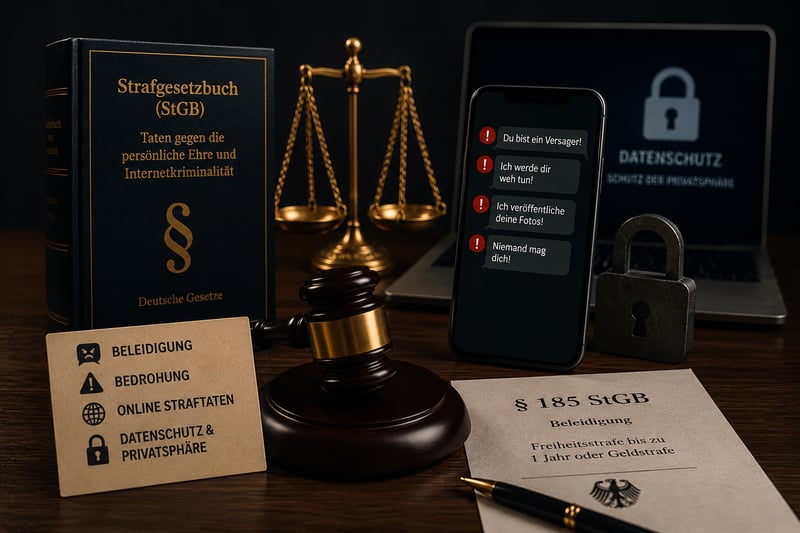
Verbal Abuse, WhatsApp Threats, Sharing Images, and Online Harassment Introduction In Germany, insults, threats, and certain forms of online behavior are taken very seriously. Many actions that may be considered “normal” or “just a moment of anger” in some countries can be treated as criminal offenses under German law. This issue is especially important on social media platforms, WhatsApp, Instagram, Telegram, and in workplace environments. German law protects: human dignity, privacy, psychological safety, and the personal lives of individuals. For this reason: verbal abuse, threats, sharing private images, online harassment, and hate speech can all lead to serious legal consequences. Part One: Insult § 185 StGB – Beleidigung (Insult) Legal Text (German): „Die Beleidigung wird mit Freiheitsstrafe bis zu einem Jahr oder mit Geldstrafe und, wenn die Beleidigung mittels einer Tätlichkeit begangen wird, mit Freiheitsstrafe bis zu zwei Jahren oder mit Geldstrafe bestraft.“ Translation: An insult is punishable by imprisonment of up to one year or a fine; if the insult is committed through physical conduct, the punishment may be imprisonment of up to two years or a fine. Simple Explanation In Germany, verbal abuse and insults can be criminal offenses. This includes: insulting someone in person, insults sent through WhatsApp, insults on Instagram, offensive comments online, or even certain insulting gestures. Examples Example 1: A person verbally insults someone else in the street. A criminal complaint may be filed. Example 2: Someone sends insulting messages through WhatsApp. Screenshots of the messages can be used as evidence. Example 3: A person insults a group of people on social media. This may become a hate speech issue. Part Two: Threats § 241 StGB – Bedrohung (Threats) Legal Text (German): „Wer einen Menschen mit der Begehung eines gegen ihn oder eine ihm nahestehende Person gerichteten Verbrechens bedroht, wird mit Freiheitsstrafe bis zu einem Jahr oder mit Geldstrafe bestraft.“ Translation: Anyone who threatens another person with committing a crime against them or against someone close to them shall be punished with imprisonment of up to one year or a fine. Simple Explanation A threat does not have to involve actual physical violence. Even statements such as: “I will kill you,” “You will see what happens to you,” or threats against someone’s family may be considered criminal offenses. Examples Example 1: After an argument, someone sends threatening messages on WhatsApp. A criminal investigation may begin. Example 2: A person threatens a coworker with physical harm. This may qualify as a criminal threat. Part Three: Sharing Private Images § 201a StGB – Violation of Highly Personal Privacy Legal Text (German): „Wer von einer anderen Person, die sich in einer Wohnung oder einem gegen Einblick besonders geschützten Raum befindet, unbefugt Bildaufnahmen herstellt oder überträgt und dadurch den höchstpersönlichen Lebensbereich der abgebildeten Person verletzt, wird bestraft.“ Translation: Anyone who, without permission, creates or distributes images or videos of another person who is in a private or specially protected space, thereby violating that person’s highly personal privacy, shall be punished. Simple Explanation In Germany, sharing photos or videos of other people without consent can create serious legal problems. This is especially sensitive regarding: private images, sexual images, photos of children, or sharing images after a breakup. Examples Example 1: A person publishes private photos of their former partner. This may be considered a criminal offense. Example 2: Someone secretly records other people and uploads the video online. This may violate privacy laws. Part Four: Hate Speech and Online Crimes § 130 StGB – Volksverhetzung (Incitement to Hatred) Legal Text (German): „Wer gegen eine nationale, rassische, religiöse oder durch ihre ethnische Herkunft bestimmte Gruppe zum Hass aufstachelt oder zu Gewalt- oder Willkürmaßnahmen auffordert, wird bestraft.“ Translation: Anyone who incites hatred or calls for violence or arbitrary measures against a national, racial, religious, or ethnically defined group shall be punished. Simple Explanation In Germany: racism, hate speech, promotion of violence, and extremist content are treated very seriously. These offenses can also be prosecuted on social media platforms. Examples Example 1: A person posts hateful messages online against an ethnic group. A criminal case may be opened. Example 2: Someone reposts extremist violent content. This may also be considered a criminal offense. Part Five: Migrants and Internet Crimes Important Warning for Migrants Many people believe: “What is written on the internet does not matter.” However, in Germany: messages, screenshots, comments, and social media posts can all be used as legal evidence against you. Possible Consequences financial fines, criminal records, difficulties finding a new job, problems extending residence permits, difficulties obtaining German citizenship, and in serious cases, imprisonment. Final Conclusion To live safely and legally in Germany: ✔ Behave respectfully online ✔ Avoid threats and insults ✔ Do not publish images of others without permission ✔ Act responsibly on social media ✔ Avoid spreading hateful or extremist content In Germany, the internet is not a “law-free space,” and online behavior can also lead to criminal consequences. ✔ Respect ✔ Responsibility ✔ Digital Awareness These three principles are the foundation of safe and lawful participation in Germany’s social and online environment.

Weapons Laws, Self-Defense, and Penalties for Illegal Possession Introduction In Germany, laws regarding weapons, knives, and self-defense tools are taken very seriously and are strictly enforced. Many newcomers to Germany assume that carrying a knife, pepper spray, or certain defensive items “just in case” or for “self-defense” is acceptable. However, in Germany, even carrying certain items without using them can still be illegal. German weapons regulations are governed by the Weapons Act (Waffengesetz – WaffG). This set of laws defines what is legally considered a weapon and what legal consequences may arise from carrying or using such items. Under German law, weapons are generally divided into two categories: Cold weapons (melee weapons): such as knives, daggers, machetes, swords, and many types of batons Firearms: such as hunting rifles and military weapons ⸻ Which Items Are Not Considered Weapons? One important exception is pepper spray designed specifically for protection against animals and labeled “Tierabwehrspray” (animal defense spray). Carrying this type of pepper spray is generally permitted without a license. However, carrying weapons or prohibited items in public places — especially in locations such as: train stations street festivals sports stadiums schools without the required legal authorization is prohibited. If police discover such items, criminal proceedings may be initiated, even if the weapon has never been used. This issue should therefore be taken very seriously. If you are an athlete or martial arts practitioner who needs to transport items such as swords, knives, or similar equipment for sports purposes, it is strongly recommended that you always carry the appropriate permits or documentation. ⸻ § 42a WaffG – Prohibition on Carrying Certain Weapons Legal Text “Es ist verboten, Anscheinswaffen, Hieb- und Stoßwaffen sowie Messer mit einhändig feststellbarer Klinge oder feststehende Messer mit einer Klingenlänge über 12 cm zu führen.” Translation It is prohibited to carry: imitation weapons (items resembling real weapons), striking or stabbing weapons, and knives with one-handed locking blades or fixed-blade knives with a blade length exceeding 12 cm. ⸻ Simple Explanation of the Law In Germany, not all knives are illegal. However, carrying certain types of knives in public places is prohibited. This particularly applies to: switchblades or locking knives tactical knives butterfly knives large knives with blades longer than 12 cm These items may legally be classified as weapons, and carrying them can create serious legal problems for the owner. ⸻ Real-Life Examples Example 1 A person carries a locking knife in their bag, and police discover it at a train station. In this situation, the individual may receive a fine, and the knife may be confiscated. Example 2 A person carries a knife during a street altercation. Even if the knife is never used, the legal consequences can become significantly more serious, and the individual may face harsher penalties. ⸻ Penalties for Carrying Weapons Without Authorization § 52 WaffG – Criminal Provisions Legal Text “Mit Freiheitsstrafe bis zu drei Jahren oder mit Geldstrafe wird bestraft, wer entgegen § 42a eine dort genannte Waffe führt.” Translation Anyone who carries a prohibited weapon or item in violation of §42a may face imprisonment of up to three years or a monetary fine. ⸻ Important Note About Pepper Spray As mentioned earlier, carrying pepper spray labeled “Tierabwehrspray” is generally legal and does not require a permit. However, if a person uses such pepper spray against another individual in self-defense, they must be able to prove that the use of force was legally justified as self-defense. In court, factors such as: the amount of spray used the distance from which it was used the severity of injuries caused the physical condition of both parties may all be considered by the judge. For example: If someone uses excessive amounts of pepper spray and causes serious or permanent injury, the court may conclude that the force used exceeded lawful self-defense. Likewise, if a physically strong adult uses pepper spray against a much weaker child or teenager, a judge may determine that using pepper spray was unnecessary because other options for self-protection existed. In such situations, the individual could potentially be convicted of assault. ⸻ Self-Defense in Germany § 32 StGB – Self-Defense (Notwehr) Legal Text “Wer eine Tat begeht, die durch Notwehr geboten ist, handelt nicht rechtswidrig.” Translation A person who commits an act required for lawful self-defense does not act unlawfully. ⸻ Simple Explanation If a person faces a real and immediate danger and acts to defend themselves, their property, or another person, they may not be considered criminally liable under German law. However, the individual must generally be able to demonstrate that: a genuine threat existed the defensive action was necessary the force used was not excessive ⸻ Tasers, Batons, and Other Defensive Tools Many self-defense devices in Germany are restricted or prohibited. If, for any reason, you intend to purchase a taser or another weapon, keep the following points in mind: 1. Never purchase weapons from unknown online sellers. 2. Buy only from licensed and authorized stores. 3. Before making a purchase, contact the appropriate authorities to determine whether a permit is required. ⸻ Firearms Germany has extremely strict firearm laws. To purchase, possess, or carry a firearm, an official license is required. ⸻ What Is a Weapons Carry Permit (Waffenschein)? A Waffenschein is an official permit allowing a person to carry a firearm in public places. Obtaining this permit is very difficult and is generally limited to: security personnel certain professional bodyguards individuals with exceptional circumstances In practice, ordinary citizens rarely qualify for such a permit. For this reason, be cautious of scammers who claim they can sell firearms together with “legal permits.” ⸻ Important Warning for Immigrants Many immigrants believe: “If I carry a knife or pepper spray only for self-defense, it should not be a problem.” However, in Germany: police are extremely sensitive regarding weapons laws carrying certain items may lead to criminal charges legal problems may arise even if the item is never used Possible consequences include: monetary fines confiscation of the item a criminal record immigration or residency complications problems obtaining citizenship and, in serious cases, imprisonment ⸻ Final Conclusion To live safely and legally in Germany: ✔ Take weapons laws seriously ✔ Avoid carrying unnecessary knives ✔ Use only legally permitted self-defense tools ✔ Stay away from violence and threats ✔ In real danger, contact the police immediately In Germany, carrying weapons and dangerous items is subject to strict legal control, and even small mistakes can lead to serious consequences. Three important principles for a safe and lawful life in Germany: ✔ Safety ✔ Responsibility ✔ Respect for the law
Yes — adults may carry animal-repellent pepper spray labelled Tierabwehrspray. Using it against a person is only justified in lawful self-defence; this guide also covers knives, tasers, and what German weapons law actually bans. In Germany, laws regarding weapons, knives, and self-defense tools are taken very seriously and are strictly enforced. Many newcomers to Germany assume that carrying a knife, pepper spray, or certain defensive items “just in case” or for “self-defense” is acceptable. However, in Germany, even carrying certain items without using them can still be illegal. German weapons regulations are governed by the Weapons Act (Waffengesetz – WaffG). This set of laws defines what is legally considered a weapon and what legal consequences may arise from carrying or using such items. Under German law, weapons are generally divided into two categories: Cold weapons (melee weapons): such as knives, daggers, machetes, swords, and many types of batons Firearms: such as hunting rifles and military weapons ⸻ Which Items Are Not Considered Weapons? One important exception is pepper spray designed specifically for protection against animals and labeled “Tierabwehrspray” (animal defense spray). Carrying this type of pepper spray is generally permitted without a license. However, carrying weapons or prohibited items in public places — especially in locations such as: train stations street festivals sports stadiums schools without the required legal authorization is prohibited. If police discover such items, criminal proceedings may be initiated, even if the weapon has never been used. This issue should therefore be taken very seriously. If you are an athlete or martial arts practitioner who needs to transport items such as swords, knives, or similar equipment for sports purposes, it is strongly recommended that you always carry the appropriate permits or documentation. ⸻ § 42a WaffG – Prohibition on Carrying Certain Weapons Legal Text “Es ist verboten, Anscheinswaffen, Hieb- und Stoßwaffen sowie Messer mit einhändig feststellbarer Klinge oder feststehende Messer mit einer Klingenlänge über 12 cm zu führen.” Translation It is prohibited to carry: imitation weapons (items resembling real weapons), striking or stabbing weapons, and knives with one-handed locking blades or fixed-blade knives with a blade length exceeding 12 cm. ⸻ Simple Explanation of the Law In Germany, not all knives are illegal. However, carrying certain types of knives in public places is prohibited. This particularly applies to: switchblades or locking knives tactical knives butterfly knives large knives with blades longer than 12 cm These items may legally be classified as weapons, and carrying them can create serious legal problems for the owner. ⸻ Real-Life Examples Example 1 A person carries a locking knife in their bag, and police discover it at a train station. In this situation, the individual may receive a fine, and the knife may be confiscated. Example 2 A person carries a knife during a street altercation. Even if the knife is never used, the legal consequences can become significantly more serious, and the individual may face harsher penalties. ⸻ Penalties for Carrying Weapons Without Authorization § 52 WaffG – Criminal Provisions Legal Text “Mit Freiheitsstrafe bis zu drei Jahren oder mit Geldstrafe wird bestraft, wer entgegen § 42a eine dort genannte Waffe führt.” Translation Anyone who carries a prohibited weapon or item in violation of §42a may face imprisonment of up to three years or a monetary fine. ⸻ Important Note About Pepper Spray As mentioned earlier, carrying pepper spray labeled “Tierabwehrspray” is generally legal and does not require a permit. However, if a person uses such pepper spray against another individual in self-defense, they must be able to prove that the use of force was legally justified as self-defense. In court, factors such as: the amount of spray used the distance from which it was used the severity of injuries caused the physical condition of both parties may all be considered by the judge. For example: If someone uses excessive amounts of pepper spray and causes serious or permanent injury, the court may conclude that the force used exceeded lawful self-defense. Likewise, if a physically strong adult uses pepper spray against a much weaker child or teenager, a judge may determine that using pepper spray was unnecessary because other options for self-protection existed. In such situations, the individual could potentially be convicted of assault. ⸻ Self-Defense in Germany § 32 StGB – Self-Defense (Notwehr) Legal Text “Wer eine Tat begeht, die durch Notwehr geboten ist, handelt nicht rechtswidrig.” Translation A person who commits an act required for lawful self-defense does not act unlawfully. ⸻ Simple Explanation If a person faces a real and immediate danger and acts to defend themselves, their property, or another person, they may not be considered criminally liable under German law. However, the individual must generally be able to demonstrate that: a genuine threat existed the defensive action was necessary the force used was not excessive ⸻ Tasers, Batons, and Other Defensive Tools Many self-defense devices in Germany are restricted or prohibited. If, for any reason, you intend to purchase a taser or another weapon, keep the following points in mind: 1. Never purchase weapons from unknown online sellers. 2. Buy only from licensed and authorized stores. 3. Before making a purchase, contact the appropriate authorities to determine whether a permit is required. ⸻ Firearms Germany has extremely strict firearm laws. To purchase, possess, or carry a firearm, an official license is required. ⸻ What Is a Weapons Carry Permit (Waffenschein)? A Waffenschein is an official permit allowing a person to carry a firearm in public places. Obtaining this permit is very difficult and is generally limited to: security personnel certain professional bodyguards individuals with exceptional circumstances In practice, ordinary citizens rarely qualify for such a permit. For this reason, be cautious of scammers who claim they can sell firearms together with “legal permits.” ⸻ Important Warning for Immigrants Many immigrants believe: “If I carry a knife or pepper spray only for self-defense, it should not be a problem.” However, in Germany: police are extremely sensitive regarding weapons laws carrying certain items may lead to criminal charges legal problems may arise even if the item is never used Possible consequences include: monetary fines confiscation of the item a criminal record immigration or residency complications problems obtaining citizenship and, in serious cases, imprisonment ⸻ Final Conclusion To live safely and legally in Germany: ✔ Take weapons laws seriously ✔ Avoid carrying unnecessary knives ✔ Use only legally permitted self-defense tools ✔ Stay away from violence and threats ✔ In real danger, contact the police immediately In Germany, carrying weapons and dangerous items is subject to strict legal control, and even small mistakes can lead to serious consequences. Three important principles for a safe and lawful life in Germany: ✔ Safety ✔ Responsibility ✔ Respect for the law