Transport and traffic
Guides on German residence permits, citizenship, work, and family law — in your language. Each article points to official statutes and is not a substitute for qualified legal advice.
5 results
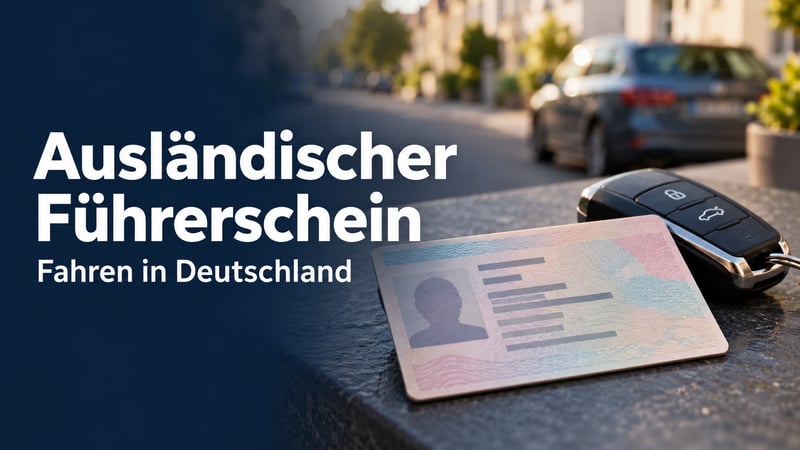
You have moved to Germany and need a car for work or shopping. Before borrowing one, check your driving entitlement. A licence card that has not expired does not necessarily give you an unlimited right to drive here. First check the issuing country A valid licence issued by an EU or EEA country is generally recognised within its authorised categories. The EEA also includes Norway, Iceland and Liechtenstein. Moving to Germany does not normally trigger the six-month conversion rule for these licences. Restrictions, disqualifications and special validity rules, particularly for lorry and bus categories, still matter. A learner permit is not an ordinary full licence. For licences from other countries, including Switzerland, the usual residence rule is different. Nationality alone does not decide which rule applies. What matters is the licence and your circumstances. Understand the six-month period Under section 29 FeV, a qualifying non-EU/EEA licence generally permits driving for six months after you establish normal residence in Germany. This is not simply six months from whichever registration appointment was convenient. Normal residence concerns personal and occupational ties and ordinarily living here for at least 185 days per year; special student situations exist. The licensing authority can, on application, extend the period by up to six months if you credibly show that normal residence in Germany will last no more than twelve months. This is an individual decision, not a general extra six months. An appointment, pending application or driving-school registration does not automatically extend permission. Ask early if the start date is uncertain. A special EU rule applies to valid Ukrainian licences held by people qualifying for temporary or adequate national protection under Regulation 2022/1280. Recognition lasts for the relevant protection period; the ordinary six-month rule should not simply be applied to them. Confirm your individual status. Prepare conversion early Contact your local Fahrerlaubnisbehörde. Ask which original documents, identity and residence evidence, photograph and translation it needs. An international driving permit does not replace the underlying national licence. Translation requirements and exemptions depend on the document and issuing state. Whether theory or practical tests are required depends on section 31 FeV and the exact country, category and footnotes in Annex 11. A country appearing there does not waive every requirement for every licence. For other qualifying licences, tests generally remain necessary, even though the statutory full training programme is not required for conversion. Preparation lessons may still be sensible. Do not assume an expired, provisional or disqualified licence can be converted on ordinary terms. An everyday example You establish normal residence with a qualifying non-EU licence and apply for conversion in month five. Processing continues into month seven. Your application alone does not let you keep driving after the six-month entitlement ends. Arrange other transport until your entitlement is confirmed. Your checklist - Check the issuing country, categories, expiry and any restrictions. - Establish the relevant residence date with the authority. - Check Annex 11 and any special protection rule. - Start documents, tests and appointments well before the deadline. - Keep written confirmation of any extension; do not treat silence as permission. This is general information. A traffic-law specialist or the licensing authority should assess disputed residence dates, previous withdrawals, professional driving and unusual licence histories before you drive. Checked: 18 October 2026 Official sources - FeV § 7 https://www.gesetze-im-internet.de/fev2010/7.html - FeV § 28 https://www.gesetze-im-internet.de/fev2010/28.html - FeV § 29 https://www.gesetze-im-internet.de/fev2010/29.html - FeV § 31 https://www.gesetze-im-internet.de/fev2010/31.html - FeV Anlage 11 https://www.gesetze-im-internet.de/fev2010/anlage11.html - EU 2022/1280, Article 3 https://eur-lex.europa.eu/eli/reg/2022/1280/oj
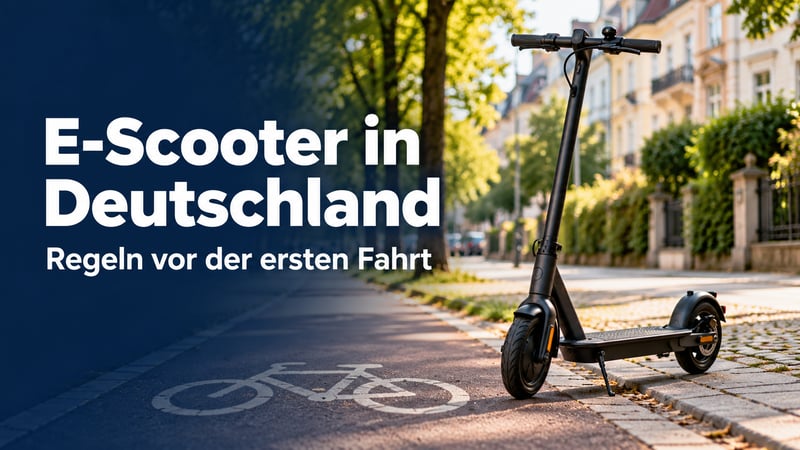
The station is ten minutes away and a rental scooter is standing outside. Unlocking it is easy; knowing where you may ride matters just as much. The main rules below concern electric small vehicles covered by the eKFV, including qualifying scooters with a design speed above 6 and no more than 20 km/h. Faster or modified models are not automatically covered by these rules. Age and equipment come first The legal minimum age is 14. You do not need a driving licence for a vehicle within this category. A rental company may set a higher contractual minimum age, so legal eligibility does not guarantee access to a particular app. For public-road use, the scooter needs the required operating approval, a valid insurance sticker and the prescribed equipment. Check the brakes, lights, bell and visible damage before leaving. A private personal-liability policy does not replace the scooter's required motor-vehicle liability insurance. Buying a scooter online or seeing a CE mark is not enough to establish German road approval. As practical safety advice, wear a well-fitting helmet and try braking and turning somewhere suitable before joining traffic. Do not modify the speed limiter and assume the original permission still applies. Where may you ride? Inside built-up areas, use the permitted cycle paths, cycle lanes and cycle streets. This includes properly designated shared pedestrian-and-cycle paths. If the relevant infrastructure is absent, you may use the carriageway or a designated traffic-calmed area. Outside built-up areas, the permitted infrastructure also includes hard shoulders. If the listed routes are absent, use the carriageway. Observe the signs and direction of travel; a cycle route is not automatically open in both directions. Ordinary pavements and pedestrian zones are not general scooter routes. An authority can permit exceptions, including through the supplementary sign “Elektrokleinstfahrzeuge frei”. Do not assume that a sign permitting bicycles also permits scooters. If your route is not permitted, dismount and push rather than taking a pavement shortcut. One scooter, one rider Carrying another person and towing a trailer are prohibited. The rule applies even when both people fit on the footboard or the journey is very short. Ride one behind another, not side by side, and do not ride hands-free or hold onto a moving vehicle. Indicate a turn clearly and in good time; if the scooter has no indicators, use a hand signal. On shared pedestrian-and-cycle paths, pedestrians have priority. Slow down as necessary and never endanger or obstruct them. Park considerately, keeping entrances and accessible routes clear, and check local restrictions and rental parking instructions. An everyday example Two friends want to use one scooter to reach the station along a pavement. Neither the short distance nor the lack of traffic makes that lawful. Each needs a separate permitted vehicle and a lawful route, or they can walk. Before you unlock - Check age eligibility, approval, insurance and visible condition. - Plan a permitted route and observe its signs. - Ride alone and leave the trailer behind. - Practise safe braking; protect your head. - Finish the ride without blocking other people. This is general information. For a modified or unusually fast vehicle, unclear approval, an accident or an insurance dispute, seek advice from a traffic-law specialist rather than assuming ordinary rental-scooter rules apply. Checked: 18 October 2026 Official sources - eKFV https://www.gesetze-im-internet.de/ekfv/BJNR075610019.html - FeV § 4 https://www.gesetze-im-internet.de/fev2010/4.html - eKFV § 2 https://www.gesetze-im-internet.de/ekfv/2.html - eKFV § 8 https://www.gesetze-im-internet.de/ekfv/8.html - eKFV § 10 https://www.gesetze-im-internet.de/ekfv/10.html - eKFV § 11 https://www.gesetze-im-internet.de/ekfv/11.html
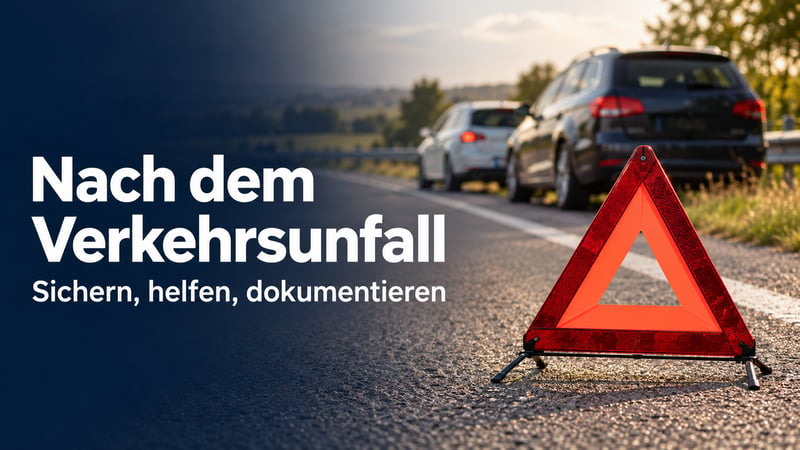
You reverse out of a parking space and hear a scrape. Or another car hits yours at a junction. In the first few minutes, focus on safety and identification rather than arguing about blame. These duties can also apply to cyclists and others whose conduct may have contributed to the accident. Stop and make the scene safe Section 34 StVO requires anyone involved to stop immediately, secure traffic and check the consequences. With only minor damage, move aside without delay so you do not unnecessarily obstruct traffic. Preserve evidence where safely possible, but do not delay urgent protection or assistance for photographs. If someone is injured, call 112 for emergency medical help and provide the assistance reasonably possible in the circumstances. You are not required to expose yourself to substantial danger. Follow the emergency operator's instructions and do not obstruct other helpers. Where police intervention is urgently needed, use 110; for a non-urgent report, contact the local station. Exchange facts, not guesses Tell the other people involved that you were involved. On request, provide your name and address, show your driving licence and vehicle registration document, and give the liability-insurance information you know. Record the other vehicle's registration number, names, contact details, time and exact location. Ask witnesses for their contact details. Photographs of positions, damage, signs and road markings can help, provided taking them is safe. Keep any police reference number. Describe what you actually observed. Do not guess about speed or sign an account you cannot understand. Exchanging legally required details is different from admitting responsibility for all the damage. What if the parked car's owner is absent? Do not simply leave a telephone number under the wiper and drive away. You must wait an appropriate time in the circumstances if nobody is available to establish the required facts. There is no universal statutory “15-minute” or “30-minute” safe period. Contact the local police from the scene to clarify how identification will be arranged. If you leave after the appropriate waiting period, you must leave your name and address and enable the necessary findings afterwards without delay. That means informing the entitled person or a nearby police station of your involvement, address, whereabouts, registration number and vehicle location, and making the vehicle available for reasonable prompt inspection. Similar follow-up duties apply when leaving was justified or excused. There is no general 24-hour grace period Section 142 StGB makes unlawful departure a criminal offence. Its narrow provision for voluntary reporting within 24 hours concerns accidents outside moving traffic with exclusively insignificant property damage. It can reduce punishment or allow the court to dispense with it; it is not permission to leave and does not guarantee immunity. An everyday example You scrape an unattended car while parking. A note saying “call me” does not complete your duties. Stop, document safely, wait as required and arrange prompt identification, preferably by contacting police while still there. Your checklist - Stop, secure the scene and check for injuries. - Call for help and provide reasonable assistance. - Exchange required details and preserve safe evidence. - Do not leave before identification duties are satisfied. - Notify your insurer promptly under your policy and keep records. This is general information. For injury, disputed liability, an allegation of leaving the scene or uncertainty about an earlier departure, get prompt advice from a traffic-law lawyer. Later reporting does not automatically erase an offence. Checked: 18 October 2026 Official sources - StVO § 34 https://www.gesetze-im-internet.de/stvo2013/34.html - StGB § 142 https://www.gesetze-im-internet.de/stgb/142.html - StGB § 323c https://www.gesetze-im-internet.de/stgb/323c.html - Polizei Brandenburg: Verkehrsunfall https://polizei.brandenburg.de/seite/ich-hatte-einen-verkehrsunfall/35331

Your train disappears from the board, or a delay means you will miss a connection. Before buying an expensive replacement, save the original itinerary and ask the operator about alternatives. Regulation (EU) 2021/782 has applied since 7 June 2023. These are rail rules; do not assume identical rights for every bus, tram or underground journey. At least 60 minutes expected: choose your next step If a cancellation, delay or missed connection is reasonably expected to make you arrive at the contractual destination at least 60 minutes late, Article 18 normally gives a choice: - Reimbursement for the unused journey and, where the trip no longer serves its original purpose, relevant used parts, with a return to the starting point where appropriate. - Continuation or rerouting under comparable conditions at the earliest opportunity. - Continuation or rerouting on a later date convenient to you. Ask the railway to arrange this. Keep written messages and screenshots, especially if you are told to buy a new ticket. Separately booked tickets do not automatically form a protected through-journey. If you continue: 25% or 50% For an eligible journey whose fare has not been refunded under Article 18, minimum delay compensation is generally 25% of the relevant ticket price for arrival 60–119 minutes late and 50% for at least 120 minutes. The destination on the ticket or through-ticket matters, rather than just one train's departure delay. For example, an eligible €80 one-way ticket and a 90-minute arrival delay normally mean €20 compensation. This assumes no applicable exception. Season tickets use the operator's applicable compensation arrangements; do not calculate a quarter of a monthly ticket for every late train. Exceptions do not remove every right Compensation can be excluded if the railway proves qualifying extraordinary circumstances outside railway operations, passenger fault or qualifying unavoidable third-party conduct. Not every bad-weather event qualifies. Strikes by the railway's own staff are not covered by the third-party exemption. Compensation is also excluded where you were informed of the delay before buying, or rerouting leaves the arrival delay below 60 minutes. These compensation exceptions do not simply cancel refund, rerouting or assistance rights. At a delay of at least 60 minutes or cancellation, assistance can include reasonable refreshments when available or reasonably supplyable and necessary accommodation where physically possible. For specified extraordinary circumstances, accommodation can be limited to three nights. Ask before making substantial purchases. The 100-minute rule is conditional If no available rerouting options are communicated within 100 minutes of the scheduled departure of the delayed or cancelled service or missed connection, Article 18 permits you to arrange alternative public transport by rail, coach or bus. Necessary, appropriate and reasonable costs must be reimbursed. This is not unrestricted permission to take a taxi or flight. Save evidence of the timing, missing information and costs. Be careful with the Deutschlandticket It is legally classified as a significantly reduced fare. The ordinary German local-rail rule allowing another train after an expected 20-minute arrival delay can be excluded for this ticket. Do not simply board an ICE expecting free travel or reimbursement. Other rights, including qualifying overnight alternatives, may still apply. Check the particular conditions first. A separately purchased ICE ticket is not automatically protected against a missed connection from your Deutschlandticket journey. Your checklist - Save the ticket, planned journey, actual arrival and disruption evidence. - Ask for rerouting and necessary assistance before self-booking. - Keep itemised receipts and explain which right you claim. - Submit promptly; complaints under Article 28 should be made within three months of the incident. This is general information. For separate tickets, high replacement costs or a rejected claim, seek passenger-rights or legal advice. Compensation, expenses and cancellation refunds require separate assessment. Checked: 18 October 2026 Official sources - EU 2021/782, Articles 18–20, 28 https://eur-lex.europa.eu/eli/reg/2021/782/oj/eng - EVO § 3 https://www.gesetze-im-internet.de/evo2023/3.html - EVO § 11 https://www.gesetze-im-internet.de/evo2023/11.html

A letter about speeding or a red light arrives. Before paying, writing a long explanation or setting it aside, check the document's heading. Different letters have different legal effects, and the date printed at the top is not necessarily the date that starts the objection period. Hearing or formal notice? An Anhörungsbogen gives you an opportunity to respond to an allegation. It is not the formal fine notice against which section 67 OWiG provides an objection. You do not have to admit the allegation or give an account of the incident. This is distinct from questions about your identity; do not provide false information or invent another driver. A Bußgeldbescheid sets out the alleged offence, evidence, fine and possible additional consequences, such as a driving ban. Read the instructions on legal remedies. An earlier response to the hearing does not replace an objection to a later notice. Two weeks from service Under section 67 OWiG, the objection period is two weeks after service, not two weeks after you eventually open the envelope. Preserve the envelope and record the service date. Service can be effective without you personally accepting the letter, so holiday absence or late collection should not be treated as an automatic extension. The objection must reach the authority that issued the notice in time. Posting it on the last day is not sufficient. Ask promptly if service, the final day or an exceptional situation is uncertain. Do not wait for a translation, file inspection or a lawyer's appointment while assuming the deadline has stopped. Use an accepted filing route The statute provides for a written objection or an objection recorded by the issuing authority. Follow the notice's instructions and verify any electronic route. An ordinary email, even with a scanned attachment, is not a safe substitute for the prescribed form. A portal intended for hearing responses may not accept a formal objection. For a straightforward objection, identify yourself, the notice date and file number and state clearly that you object. A detailed justification is not generally required to lodge it in time. For example: “Hiermit lege ich gegen den Bußgeldbescheid vom [Datum], Aktenzeichen [Nummer], Einspruch ein.” Use the permitted form, sign a paper submission and keep proof of timely receipt. Obtain advice before limiting the objection to only part of the decision. What happens next, and what can it cost? The authority checks admissibility and whether to maintain or withdraw its notice. If it maintains the case, it can proceed through the public prosecutor to the local court. An objection does not guarantee cancellation, a lower fine or avoidance of a driving ban. A less favourable decision is possible. The notice already normally includes an administrative fee of 5% of the fine, at least €25 and at most €7,500, plus expenses. Formal service commonly adds €3.50. Court proceedings and legal representation can add further costs; insurance coverage should be checked separately. Do not confuse the payment instructions with the objection deadline. An everyday example You answered the hearing and then receive a formal notice. You leave it unopened while awaiting a reply to your earlier explanation. The formal objection period can still expire. Deal with the new notice independently and preserve the deadline if you wish to contest it. Your checklist - Identify the letter and save its envelope. - Record service and calculate the objection deadline. - Verify recipient, filing method and timely receipt. - Keep copies and review evidence, consequences and costs. This is general information. Seek prompt traffic-law advice for a threatened driving ban, disputed driver identity, missed deadline or significant licence consequences. Reinstatement after a missed deadline requires its own conditions; it is not automatic. Checked: 18 October 2026 Official sources - OWiG § 55 https://www.gesetze-im-internet.de/owig1968/55.html - OWiG § 66 https://www.gesetze-im-internet.de/owig1968/66.html - OWiG § 67 https://www.gesetze-im-internet.de/owig1968/67.html - OWiG § 69 https://www.gesetze-im-internet.de/owig1968/69.html - OWiG § 107 https://www.gesetze-im-internet.de/owig1968/107.html - Polizei Berlin: Bußgeldstelle https://www.berlin.de/polizei/aufgaben/bussgeldstelle/erreichbarkeit/