Трудове право
Гайди про посвідку на проживання, громадянство, роботу та сімейне право в Німеччині — вашою мовою. Кожна стаття посилається на офіційні закони і не замінює кваліфіковану юридичну консультацію.
3 результатів
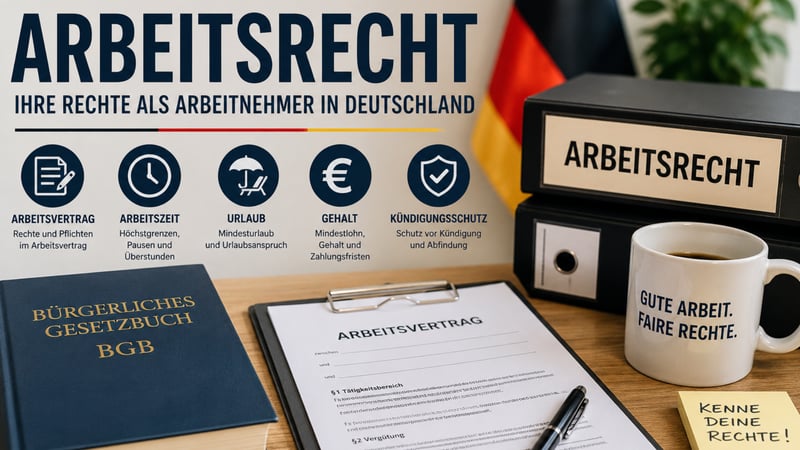
Трудовий договір, права працівників, робочий час і важливі правила на робочому місці ⸻ Вступ Багато мігрантів, які виходять на ринок праці Німеччини, на початку свого шляху недостатньо добре знайомі з трудовим законодавством цієї країни. Через це іноді виникають непорозуміння, трудові конфлікти або навіть зловживання на роботі. У Німеччині трудове право стосується не лише щомісячної зарплати. Такі питання, як: трудовий договір, робочий час, відпустка, хвороба, звільнення, понаднормова робота, захист працівника, а також ставлення роботодавця до працівника, регулюються чіткими законами. Мета німецького трудового законодавства — створити баланс між правами роботодавця, безпекою працівників та порядком на робочому місці. Ця стаття є загальним вступом до найважливіших принципів трудового права Німеччини. У наступних статтях кожна тема буде пояснена окремо та більш детально. ⸻ Трудовий договір (Arbeitsvertrag) у Німеччині У більшості випадків трудові відносини між роботодавцем і працівником регулюються трудовим договором. Зазвичай договір містить: вид роботи, розмір заробітної плати, робочий час, кількість днів відпустки, строк дії договору, випробувальний термін (Probezeit), а також умови розірвання договору. ⸻ Чи має усний договір юридичну силу? У багатьох випадках — так. Навіть якщо письмового договору немає, трудові відносини можуть вважатися юридично чинними. Однак письмовий договір є дуже важливим. Адже у разі виникнення спору: підтвердження прав, робочого часу, або розміру зарплати без письмового документа буде значно складнішим. ⸻ Випробувальний термін (Probezeit) У багатьох трудових договорах перші кілька місяців вважаються випробувальним терміном. Зазвичай випробувальний термін триває до 6 місяців, хоча за згодою сторін цей строк може бути скорочений. Особливість випробувального терміну полягає в тому, що в цей період обидві сторони можуть легше розірвати договір. ⸻ Робочий час у Німеччині Німецьке законодавство встановлює чіткі обмеження щодо робочого часу. ⸻ Важлива правова норма § 3 Arbeitszeitgesetz (ArbZG) Текст закону (німецькою мовою) „Die werktägliche Arbeitszeit der Arbeitnehmer darf acht Stunden nicht überschreiten.“ ⸻ Переклад «Щоденний робочий час працівників не повинен перевищувати 8 годин.» ⸻ Просте пояснення У багатьох професіях: стандартний робочий день становить 8 годин. Однак у деяких випадках: дозволяється законна понаднормова робота, за умови дотримання правил щодо відпочинку та середньої тривалості робочого часу. ⸻ Відпочинок і Pause У Німеччині працівники мають право на перерву (Pause) під час тривалих змін. Роботодавець зобов’язаний дотримуватися законів щодо робочого часу та часу відпочинку. ⸻ Мінімальна заробітна плата (Mindestlohn) у Німеччині У Німеччині існує встановлена законом мінімальна заробітна плата. Роботодавець зазвичай не може платити менше встановленого мінімуму, за винятком окремих випадків, передбачених законом. Розмір мінімальної зарплати може змінюватися щороку. ⸻ Відпустка (Urlaub) у Німеччині Працівники в Німеччині мають право на відпустку. Згідно із законом, багато працівників мають щонайменше 20 робочих днів відпустки на рік, а багато компаній надають ще більше днів. ⸻ Хвороба та лікарняний Якщо працівник захворів, він повинен повідомити роботодавця та в деяких випадках надати довідку від лікаря. У багатьох випадках працівник продовжує отримувати зарплату під час хвороби. ⸻ Звільнення (Kündigung) у Німеччині У Німеччині звільнення не завжди відбувається негайно та без дотримання закону. Багато працівників мають правовий захист, і роботодавець повинен дотримуватися визначених правил. ⸻ Дуже важливий момент Якщо людина отримала лист про Kündigung (звільнення), зазвичай потрібно діяти швидко. У багатьох випадках для юридичного оскарження є лише 3 тижні. ⸻ Чи може роботодавець доручати роботу поза межами договору? Це одне з найпоширеніших питань серед мігрантів. Чи може роботодавець у певних ситуаціях доручати працівнику пов’язані, логічні та відповідні його професії завдання? Коротка відповідь: це залежить від виду роботи та умов договору. Наприклад: якщо людина працює електриком, її можуть попросити: зібрати інструменти, прибрати робоче місце, або очистити свою робочу зону. Зазвичай це вважається нормальним. ⸻ Де проходить правова межа? Роботодавець не може: постійно змушувати працівника виконувати абсолютно не пов’язану роботу, принижувати працівника, або зловживати своїм становищем. Наприклад: змушувати електрика щодня після роботи прибирати громадські туалети компанії, якими користуються всі працівники. ⸻ Понаднормова робота (Überstunden) Багато мігрантів вважають, що понаднормова робота завжди є обов’язковою. Однак: понаднормова робота повинна бути законною, і в багатьох випадках вона має компенсуватися: або додатковою оплатою, або додатковим часом для відпочинку. ⸻ Дискримінація на робочому місці У Німеччині незаконною є дискримінація за: расовою ознакою, релігією, статтю, або етнічним походженням. Працівники мають право працювати в безпечному та шанобливому середовищі. У разі дискримінаційної поведінки людина може подати скаргу або в деяких випадках звернутися до суду. Це стосується як роботодавця, так і інших працівників. ⸻ Поширені помилки мігрантів Деякі мігранти: підписують договір, не читаючи його, не знають своїх законних прав, або не фіксують робочий час і понаднормові години. Іноді це призводить до трудових проблем або зловживань. ⸻ Важливе попередження У Німеччині трудовий договір, страхування, сплата податків та офіційна реєстрація роботи мають велике значення. Інакше робота може вважатися «Schwarzarbeit» (нелегальна робота), що може створити серйозні проблеми як для працівника, так і для роботодавця. Для мігрантів це також може негативно вплинути на дозвіл на проживання та страхування. ⸻ Намагайтеся повністю зрозуміти договір Оскільки договір складається німецькою мовою, мігрантам, які недостатньо добре володіють німецькою, краще перекласти текст перед підписанням, щоб повністю розуміти зміст документа. ⸻ Підсумок Для безпечного трудового життя в Німеччині: ✔ Уважно читайте трудовий договір ✔ Знайте свої законні права ✔ Фіксуйте робочий час і понаднормові години ✔ Серйозно ставтеся до страхування та податків ✔ Швидко реагуйте на трудові проблеми У Німеччині знання трудового права потрібне не лише для уникнення проблем; воно допомагає людям працювати та жити безпечніше, спокійніше й більш усвідомлено. ⸻ ✔ Обізнаність ✔ Відповідальність ✔ Знання законних прав Ці три принципи є основою професійного успіху в Німеччині.
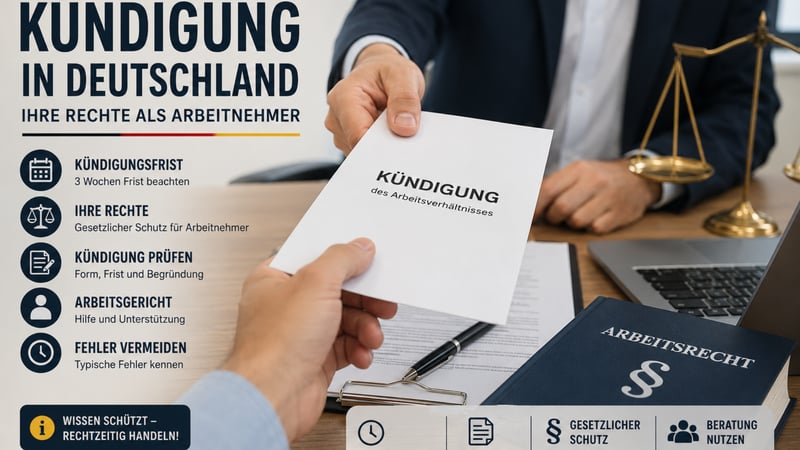
Права працівників, строки оскарження та важливі юридичні помилки ⸻ Вступ Для багатьох мігрантів, які працюють у Німеччині, отримання листа про звільнення — Kündigung — є однією з найстресовіших подій у трудовому житті. Деякі люди вважають, що в Німеччині роботодавець може звільнити працівника будь-коли й без пояснення причин. Насправді ж німецьке трудове законодавство в багатьох випадках захищає працівників, а роботодавець зобов’язаний дотримуватися чітких правил і процедур. Водночас багато мігрантів через незнання закону втрачають можливість оскарження, підписують неправильні документи або стикаються з фінансовими та міграційними проблемами, не знаючи своїх прав. Ця стаття є простим і практичним посібником щодо умов і правил припинення трудових відносин у Німеччині. ⸻ Що таке Kündigung? Kündigung — це офіційне письмове повідомлення про припинення трудових відносин. Таке припинення може відбуватися: з боку роботодавця, або з боку працівника. Однак обидві сторони повинні дотримуватися умов, зазначених у трудовому договорі, якщо вони не суперечать законам Німеччини. Наприклад: Якщо в трудовому договорі, підписаному обома сторонами, зазначено, що працівник повинен письмово повідомити про звільнення за 4 тижні до бажаної дати припинення роботи, то працівник не може вказати термін лише у 2 тижні — за винятком особливих випадків, про які йтиметься нижче. ⸻ Види звільнення в Німеччині У Німеччині існує кілька основних видів Kündigung: 1. Ordentliche Kündigung Звичайне звільнення з дотриманням законного строку попередження. 2. Fristlose Kündigung Негайне звільнення без дотримання строку попередження, встановленого законом або договором. 3. Aufhebungsvertrag Припинення трудових відносин за взаємною згодою сторін. ⸻ Питання: Чи можна розірвати трудовий договір усно? Зазвичай — ні. У Німеччині Kündigung має бути письмовим і офіційним. Це означає, що повідомлення у WhatsApp, телефонний дзвінок, електронний лист або усне звільнення зазвичай недостатні. Сторона, яка бажає припинити трудові відносини, повинна надати письмовий документ із підписом і датою. ⸻ Важливе правове положення § 623 BGB – Письмова форма звільнення Текст закону „Die Beendigung von Arbeitsverhältnissen durch Kündigung oder Auflösungsvertrag bedarf zu ihrer Wirksamkeit der Schriftform.“ ⸻ Переклад «Припинення трудових відносин шляхом звільнення або угоди про розірвання договору для своєї чинності потребує письмової форми.» ⸻ Випробувальний термін (Probezeit) та звільнення У багатьох трудових договорах перші місяці вважаються випробувальним терміном (Probezeit). У цей період припинити трудові відносини зазвичай легше, а строк повідомлення є коротшим. Проте навіть під час випробувального терміну продовжують діяти деякі захисні закони та заборона дискримінації. ⸻ Найпоширеніша помилка мігрантів Деякі люди думають: «Оскільки я перебуваю на випробувальному терміні, я не маю жодних прав.» Це абсолютно неправильно. Закон усе одно захищає працівника, і якщо ви не згодні зі звільненням з боку роботодавця, ви маєте право його оскаржити. ⸻ Строк оскарження звільнення Дуже важливо: Якщо людина отримала Kündigung, у неї зазвичай є лише 3 тижні для подання скарги до Arbeitsgericht (трудового суду). Якщо цей строк пропущено, навіть незаконне звільнення може вважатися дійсним. ⸻ Приклад Уявімо: Роботодавець звільняє вас без вагомої причини, але ви відкладаєте лист убік або реагуєте надто пізно. Після завершення законного строку оскаржити звільнення буде значно складніше. Вам доведеться надати переконливу причину, чому ви не подали скаргу вчасно, інакше шанси на розгляд справи будуть дуже низькими. Прикладами переконливих причин можуть бути: хвороба та госпіталізація, смерть близького родича, або подібні серйозні обставини. ⸻ Чи повинен роботодавець пояснювати причину звільнення? Так. Особливо у великих компаніях, де діє Kündigungsschutzgesetz (KSchG) — Закон про захист від звільнення. ⸻ Що таке Fristlose Kündigung? Fristlose Kündigung — це негайне звільнення, коли роботодавець вважає, що продовження трудових відносин більше неможливе. Наприклад: Якщо роботодавець може довести крадіжку, насильство, погрози, серйозні образи, шахрайство або грубе порушення правил компанії з боку працівника, він може швидко звільнити працівника. У деяких випадках роботодавець може розірвати договір без дотримання звичайного строку попередження. Проте це все одно має відповідати закону і може бути оскаржене. ⸻ Чи може хвороба призвести до звільнення? Багато мігрантів бояться цього і тому намагаються виходити на роботу навіть під час хвороби. Однак у Німеччині є відомий вислів: «Спочатку здоров’я, потім робота.» Це означає, що якщо ви дійсно почуваєтеся погано, ви можете скористатися лікарняним. Короткострокова хвороба зазвичай не є достатньою причиною для звільнення — якщо тільки роботодавець не доведе, що хвороба була неправдивою і людина лише вдавала хворобу, щоб не працювати. Наприклад: Працівник заявляє, що хворий, але пізніше виявляється, що він поїхав у подорож і насправді не був хворий. Існує й інша ситуація: Якщо людина через хворобу більше не може працювати на колишньому рівні, припинення трудових відносин може стати можливим. В інших випадках кілька днів відпочинку через застуду або короткочасну хворобу зазвичай не є достатньою причиною для звільнення. ⸻ Звільнення під час вагітності У Німеччині вагітні жінки мають дуже сильний правовий захист. Тому звільнення під час вагітності або незабаром після пологів зазвичай є незаконним. Жоден роботодавець не має права звільнити працівницю через вагітність. ⸻ Що таке Aufhebungsvertrag? Деякі роботодавці замість Kündigung пропонують підписати Aufhebungsvertrag. Це означає припинення трудових відносин за взаємною згодою сторін. ⸻ Важливе попередження Деякі мігранти підписують такі угоди без консультації. Однак це може негативно вплинути на допомогу з безробіття, дозвіл на проживання або соціальні виплати. Пам’ятайте: Якщо звільнення ініційоване роботодавцем, ви можете звернутися до служби зайнятості та подати заявку на допомогу з безробіття. Залежно від тривалості вашої роботи та сімейної ситуації ви можете отримувати від 65% до 75% вашої чистої зарплати протягом періоду від 9 до 15 місяців. Однак якщо ініціатива припинення трудових відносин виходить від вас або договір припиняється за взаємною згодою, виплата допомоги може бути затримана або обмежена. ⸻ Що робити після отримання листа про звільнення? Якщо ви отримали Kündigung: ✔ Зберігайте спокій ✔ Зафіксуйте дату отримання листа ✔ Не забудьте про строк у 3 тижні ✔ Нічого не підписуйте, не прочитавши уважно ✔ За потреби зверніться до адвоката або Beratungsstelle (консультаційного центру) Також обов’язково зверніться до Agentur für Arbeit для офіційної реєстрації безробіття та отримання можливої соціальної підтримки. ⸻ Чи може звільнення вплинути на дозвіл на проживання? Для деяких мігрантів — так. Особливо якщо дозвіл на проживання пов’язаний із роботою або людина довго залишається безробітною. Однак не кожне звільнення означає втрату дозволу на проживання. ⸻ Дискримінація та незаконне звільнення Якщо звільнення сталося через національність, релігію, стать, вік або інші дискримінаційні причини, воно може вважатися незаконним. ⸻ Роль трудового суду (Arbeitsgericht) Arbeitsgericht — це спеціалізований суд з трудових спорів у Німеччині. Тут розглядаються багато справ, пов’язаних зі звільненнями, зарплатами, понаднормовою роботою та трудовими конфліктами. ⸻ Небезпечні помилки мігрантів Деякі люди ігнорують лист Kündigung, реагують занадто пізно або підписують документи, не розуміючи їх повністю. Це може призвести до серйозних проблем. Також важливо знати, що підпис про отримання листа не обов’язково означає згоду зі звільненням. ⸻ Підсумок У Німеччині звільнення не завжди означає втрату всіх прав працівника. Багато працівників мають право на оскарження, правовий захист і судовий розгляд. Щоб захистити свої права: ✔ Зберігайте трудовий договір ✔ Серйозно ставтеся до офіційних листів ✔ Дотримуйтеся законних строків ✔ Не підписуйте нічого без розуміння змісту ✔ За потреби швидко звертайтеся за консультацією У Німеччині знання трудових прав може запобігти багатьом професійним, фінансовим і навіть міграційним проблемам.
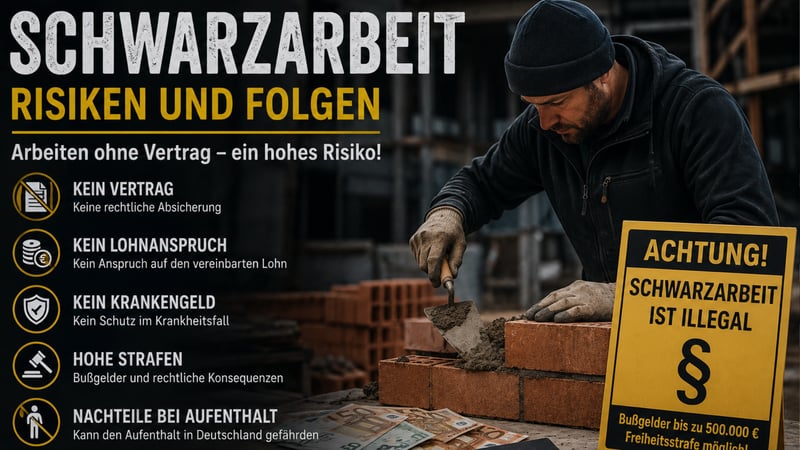
Нелегальна праця, ухилення від сплати податків, покарання та серйозні ризики для мігрантів ⸻ Вступ Багато мігрантів, які щойно приїжджають до Німеччини, незабаром стикаються з терміном Schwarzarbeit — тобто нелегальна або «чорна» робота. Перш за все потрібно пояснити, що саме означає Schwarzarbeit. Schwarzarbeit — це робота без офіційної реєстрації. Тобто: робота або працевлаштування без офіційного оформлення, без сплати податків, без страхування, і без реєстрації в правовій системі Німеччини. Деякі люди вважають, що якщо не платити податки, працювати без договору або отримувати зарплату готівкою, то це не створює великої проблеми. Однак у Німеччині Schwarzarbeit вважається дуже серйозним порушенням і може спричинити тяжкі юридичні наслідки для працівника, роботодавця та навіть для міграційного статусу іноземців. Багато мігрантів починають працювати неофіційно, не знаючи законів, але пізніше стикаються з фінансовими штрафами, проблемами зі страхуванням, втратою законних прав або навіть ризиком для дозволу на проживання. Ця стаття є простим і практичним посібником щодо поняття Schwarzarbeit, пов’язаних законів і важливих ризиків у Німеччині. ⸻ Важлива інформація про перевірки Zoll Слід знати, що якщо працівники німецької митної служби Zoll, які відповідають за виявлення нелегальної праці, знайдуть на робочому місці нелегального працівника (тобто людину без офіційного трудового договору), вони можуть відкрити справу як проти працівника, так і проти роботодавця. Це базується на: § 1 Schwarzarbeitsbekämpfungsgesetz (SchwarzArbG) Текст закону „Schwarzarbeit leistet, wer Dienst- oder Werkleistungen erbringt oder ausführen lässt und dabei als Arbeitgeber, Unternehmer oder versicherungspflichtiger Selbstständiger seine sich aufgrund der Dienst- oder Werkleistungen ergebenden sozialversicherungsrechtlichen Melde-, Beitrags- oder Aufzeichnungspflichten nicht erfüllt, als Steuerpflichtiger seine sich aufgrund der Dienst- oder Werkleistungen ergebenden steuerlichen Pflichten nicht erfüllt, als Empfänger von Sozialleistungen seine sich aufgrund der Dienst- oder Werkleistungen ergebenden Mitteilungspflichten gegenüber dem Sozialleistungsträger nicht erfüllt.“ ⸻ Переклад «Нелегально працює той, хто виконує або доручає виконання послуг чи робіт і при цьому: як роботодавець, підприємець або застрахована самозайнята особа не виконує обов’язки щодо реєстрації, сплати внесків або ведення обліку в системі соціального страхування; як платник податків не виконує свої податкові обов’язки; або, отримуючи соціальні виплати, не повідомляє про доходи від такої роботи органам соціального забезпечення.» ⸻ Як працівник, який погодився працювати без договору, так і роботодавець, який найняв працівника без офіційного оформлення, можуть зіткнутися зі штрафами або юридичним переслідуванням. Розгляд цих двох справ може відрізнятися, але обидві сторони можуть понести правові наслідки. У цій частині ми спочатку пояснимо, як закон ставиться до роботодавців, які наймають нелегальних працівників, а потім розглянемо наслідки Schwarzarbeit для працівників, особливо для мігрантів. ⸻ Чи будь-яка робота за готівку є незаконною? Ні. Отримання зарплати готівкою саме по собі не є незаконним. На практиці виплата зарплати готівкою не є порушенням, якщо дохід офіційно зареєстрований і з нього сплачуються податки та страхові внески. Проблема виникає тоді, коли: робота не зареєстрована, податки не сплачуються, немає страхування, або державні органи не знають про працевлаштування людини. ⸻ Простий приклад Уявіть людину, яка працює в ресторані, на будівництві чи ремонті, у перукарні або в клінінговій сфері, але: у неї немає трудового договору, немає страхування, а зарплату вона отримує готівкою таємно. У багатьох випадках така ситуація вважається Schwarzarbeit. ⸻ «Наполовину легальна, наполовину нелегальна» робота Деякі роботодавці оформлюють працівників частково легально, а частково нелегально. Наприклад: офіційно реєструють контракт на 20 годин на тиждень і сплачують податки та страховку лише за ці 20 годин, але фактично змушують працівника працювати 40 годин, а решту зарплати виплачують готівкою. Хоча довести це буває складно, це не неможливо. Якщо буде доведено, що роботодавець навмисно використовував такі схеми для приховування нелегальної праці, на нього можуть чекати ще суворіші покарання. ⸻ Покарання за Schwarzarbeit у Німеччині Багато людей вважають, що Schwarzarbeit — це лише незначне порушення. Проте в деяких випадках може бути порушена кримінальна справа, а також призначені дуже великі штрафи або навіть ув’язнення. ⸻ Важлива правова норма щодо штрафів § 8 SchwarzArbG – Bußgeldvorschriften Текст закону „Ordnungswidrig handelt, wer vorsätzlich oder fahrlässig einer Vorschrift dieses Gesetzes zuwiderhandelt.“ ⸻ Переклад «Особа, яка навмисно або через недбалість порушує положення цього закону, вчиняє адміністративне правопорушення.» ⸻ Яким може бути штраф? Залежно від порушення штраф може становити від кількох сотень євро до 50 000 євро або навіть більше. У деяких випадках, якщо справа переходить у кримінальне провадження, особу або компанію можуть звинуватити у: ухиленні від сплати податків, шахрайстві із соціальними виплатами, або масштабній трудовій експлуатації. ⸻ Що буде, якщо податки не були сплачені? Податкова служба (Finanzamt) може вимагати сплати всіх несплачених податків разом із штрафами та відсотками. ⸻ Приклад Уявіть роботодавця, який найняв кількох працівників без офіційного оформлення, не сплачував страховку, не подавав податки та платив зарплату готівкою. Якщо буде проведена перевірка: йому можуть загрожувати штрафи на тисячі євро, податкові борги та навіть кримінальна справа. ⸻ Чи карають також працівника? Так. Деякі мігранти вважають, що відповідальність несе лише роботодавець. Але якщо людина свідомо працює без офіційного оформлення, неправомірно отримує соціальні виплати або приховує свої доходи, вона також може бути оштрафована, притягнута до кримінальної відповідальності або зіткнутися з проблемами з дозволом на проживання. ⸻ Отримання соціальних виплат і нелегальна робота одночасно Це одна з найчутливіших тем у Німеччині. Якщо людина одночасно отримує державну допомогу — наприклад, допомогу з безробіття або соціальні виплати — і при цьому має нелегальний дохід, це може розглядатися як соціальне шахрайство. Окрім фінансових штрафів, людина може втратити частину соціальних пільг. Якщо порушник є мігрантом, у нього також можуть виникнути труднощі при продовженні дозволу на проживання. Наприклад: заяву на постійне проживання можуть відхилити, або може постраждати справа щодо отримання громадянства. Крім того, оскільки нелегальний працівник не має страхового покриття, у разі нещасного випадку він може не тільки втратити право на страхову підтримку, а й мати труднощі з отриманням компенсації, виплат по інвалідності або покриття медичних витрат від роботодавця. ⸻ Приклад Уявіть працівника, який нелегально працює на будівництві та падає з риштування або отримує серйозну травму. У такій ситуації: отримання компенсації, страхова підтримка, або доведення трудових відносин можуть бути дуже складними. Працівник, окрім фізичних проблем, ще й потрапляє у складний юридичний процес. ⸻ Поширені помилки мігрантів Деякі люди: починають працювати без договору, довіряють лише усним обіцянкам, або думають, що «кілька місяців нелегальної роботи — це не проблема». Але згодом вони: не отримують зарплату, залишаються без страховки, або стикаються з міграційними проблемами. ⸻ Важливе попередження Деякі роботодавці кажуть мігрантам: «Усе добре, проблем не буде.» Але якщо виникає проблема: найбільш вразливою стороною зазвичай є працівник, особливо якщо це мігрант, який недостатньо знає німецьку мову та закони Німеччини. ⸻ Підсумок Для безпечного майбутнього в Німеччині: ✔ Працюйте лише легально ✔ Завжди майте трудовий договір ✔ Серйозно ставтеся до страхування та податків ✔ Не працюйте без офіційної реєстрації ✔ Не довіряйте повністю неофіційним обіцянкам У Німеччині нелегальна робота може здаватися простим рішенням у короткостроковій перспективі, але в довгостроковій перспективі вона може спричинити дуже серйозні фінансові, юридичні та міграційні проблеми. ✔ Трудова безпека ✔ Страхування та правовий захист ✔ Безпечне міграційне майбутнє Ці три фактори є найважливішими причинами уникати Schwarzarbeit у Німеччині.