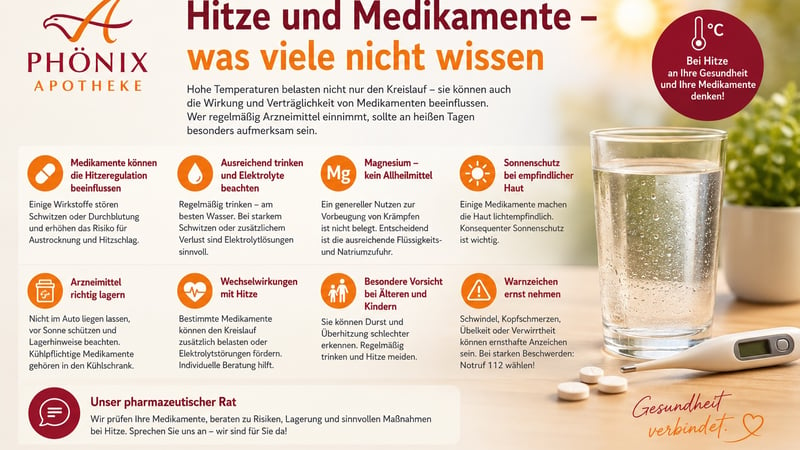
Heat and Medication – Your Questions, Our Answers
High temperatures not only strain the circulatory system – they can also affect the efficacy of medications. Here’s an overview of the most important questions on this topic.
Which medications influence the body's heat regulation?
The body primarily regulates its temperature through sweating and skin blood flow. Some active ingredient groups interfere with these mechanisms: Diuretics (water pills) promote the excretion of fluid and electrolytes, thereby increasing the risk of dehydration. Certain blood pressure medications affect vasodilation and thus heat release through the skin. Anticholinergic substances – found in some antidepressants, neuroleptics, Parkinson's and allergy medications – inhibit sweat production, which is the body's most important cooling mechanism.
Can I simply stop taking my medication or change the dose when it's hot?
No. Never stop taking medication on your own or change the dosage without consulting a doctor or pharmacist.
How much should I drink when it's hot?
Regularly, ideally water or unsweetened beverages. When you sweat, you lose fluid and electrolytes – however, older people often experience a diminished sense of thirst, so you should drink actively and not wait until you are thirsty.
When are electrolyte solutions useful?
With sweat, the body primarily loses sodium and potassium. In cases of heavy sweating, physical exertion, or additional fluid loss due to diarrhea or vomiting, electrolyte solutions can be helpful. For healthy people, water and a balanced diet are usually sufficient for everyday life.
Hydrates magnesium help against heat-related muscle cramps?
A clear scientific benefit for prevention has not been proven. Adequate fluid and electrolyte supply is more crucial, as heat cramps are usually more related to electrolyte losses.
How do I store medications correctly at high temperatures?
Never leave medicines in the car, protect them from direct sunlight, and observe the storage instructions on the packaging. Insulin, some biologics, and other refrigerated medicines must be consistently kept in the refrigerator. If medications have been exposed to high heat for an extended period, their effectiveness may decrease – if in doubt, ask at the pharmacy.
Which medications make the skin more photosensitive?
Certain antibiotics, diuretics, or herbal preparations containing St. John's wort can increase skin sensitivity to sunlight. This can result in severe sunburn or skin reactions – even after brief sun exposure. Good sun protection and avoiding intense sun are therefore important.
Which warning signs of heat exhaustion should I take seriously?
Dizziness, severe fatigue, headaches, confusion, muscle cramps, or nausea can be signs of heat exhaustion. In case of high fever, impaired consciousness, or suspected heatstroke, call emergency services immediately at 112.
What can the Phönix Pharmacy do for me?
Especially in summer, a quick medication check is worthwhile. We will work with you to check whether your medications are heat-sensitive, how they should be stored correctly, whether special precautions are necessary, and answer your questions about medicines and heat. Feel free to contact us – we will advise you individually and competently.
Phönix Pharmacy Düsseldorf
Health connects us.