Aufenthaltsrecht in Deutschland: Titel und Staatsangehörigkeit
Das deutsche Aufenthaltsrecht entscheidet, wer leben, arbeiten und Staatsangehörige:r werden darf. Ein Aufenthaltstitel muss vor Ablauf verlängert werden; unten finden Sie Arten von Titeln, Einbürgerung und übliche Unterlagen.
5 Ergebnisse

Ein umfassender Überblick über die wichtigsten Aufenthaltstitel, Voraussetzungen, Rechte und den Weg zur Niederlassungserlaubnis ⸻ Einleitung Deutschland gehört zu den wichtigsten Einwanderungsländern Europas. Jedes Jahr versuchen Hunderttausende Menschen aus aller Welt, nach Deutschland auszuwandern. Die Migranten in Deutschland haben unterschiedliche Hintergründe, weshalb das deutsche Auswärtige Amt und die zuständigen Behörden für verschiedene Gruppen besondere Regelungen vorgesehen haben. In diesem Artikel erklären wir kurz die verschiedenen Visatypen, die von deutschen Botschaften ausgestellt werden, sowie die unterschiedlichen Aufenthaltstitel in Deutschland. Denn in Deutschland ist Ihr Aufenthaltstitel nicht nur eine einfache „Aufenthaltskarte“. Er beeinflusst viele Bereiche Ihres Lebens direkt, darunter: die Arbeitserlaubnis, die Sicherheit des Aufenthalts, die Möglichkeit der Verlängerung, das Reiserecht, die Möglichkeit des Familiennachzugs, den Erhalt einer Niederlassungserlaubnis, und sogar den Erwerb der deutschen Staatsangehörigkeit. Deshalb ist es für jeden Migranten wichtig, die verschiedenen Aufenthaltsarten in Deutschland zu kennen. ⸻ Unterschied zwischen Visum und Aufenthaltserlaubnis Viele Menschen glauben, dass „Visum“ und „Aufenthaltserlaubnis“ dasselbe bedeuten. In Deutschland handelt es sich jedoch um zwei unterschiedliche Dinge. Ein Visum wird in der Regel vor der Einreise nach Deutschland erteilt und erlaubt lediglich die erstmalige Einreise in das Land. Nach der Einreise muss die Person bei der Ausländerbehörde eine Aufenthaltserlaubnis beantragen. Die Aufenthaltserlaubnis bestimmt: wie lange Sie sich in Deutschland aufhalten dürfen, ob Sie arbeiten dürfen, ob Sie studieren dürfen, und welche gesetzlichen Rechte Sie haben. ⸻ Aufenthaltserlaubnis zur Beschäftigung Eine der häufigsten Aufenthaltsarten in Deutschland ist die Aufenthaltserlaubnis zur Beschäftigung. Sie wird Personen erteilt, die: einen Arbeitsvertrag besitzen, von einem deutschen Unternehmen eingestellt wurden, oder über berufliche Qualifikationen verfügen, die auf dem deutschen Arbeitsmarkt benötigt werden. Für die Erteilung dieses Aufenthaltstitels sind in der Regel folgende Voraussetzungen erforderlich: ein gültiger Arbeitsvertrag, ausreichendes Einkommen, eine Krankenversicherung, sowie ein gültiger Reisepass. Bei einigen Berufen muss zusätzlich die Bundesagentur für Arbeit der Beschäftigung zustimmen. ⸻ Was ist die Blue Card? Die Blue Card gehört zu den wichtigsten und beliebtesten Aufenthaltstiteln für qualifizierte Fachkräfte in Deutschland. Dieser Aufenthaltstitel eignet sich insbesondere für: Ingenieure, Programmierer, Ärzte, IT-Fachkräfte, und Hochschulabsolventen. ⸻ Die wichtigsten Vorteile der Blue Card Inhaber einer Blue Card haben gegenüber einer normalen Aufenthaltserlaubnis zur Beschäftigung mehrere Vorteile, darunter: ✔ Schnellere Möglichkeit zur Niederlassungserlaubnis ✔ Einfacherer Familiennachzug ✔ Mehr Freiheit auf dem Arbeitsmarkt ✔ Höhere Aufenthaltssicherheit ✔ Unter bestimmten Voraussetzungen einfachere Mobilität innerhalb der Europäischen Union ⸻ Wie hoch ist das Mindestgehalt für die Blue Card in Deutschland? Das erforderliche Mindestgehalt für die Blue Card ändert sich jedes Jahr. Im Jahr 2025 lag das erforderliche jährliche Bruttomindestgehalt in der Regel bei etwa: 45.300 Euro brutto pro Jahr Für sogenannte Mangelberufe wie: Informatik, Bauingenieurwesen, Mathematik, Naturwissenschaften, Medizin kann die Blue Card jedoch bereits mit einem Jahresbruttogehalt von etwa: 41.000 Euro brutto pro Jahr erteilt werden. Wichtig: Die Voraussetzungen für die Blue Card können sich jährlich ändern. ⸻ Aufenthaltserlaubnis zum Studium Deutschland gehört zu den beliebtesten Ländern der Welt für internationale Studierende. Die Aufenthaltserlaubnis zum Studium wird erteilt für: Universitätsstudiengänge, Studienkollegs, Sprachkurse, oder bestimmte Fachausbildungen. ⸻ Voraussetzungen für den Studienaufenthalt In der Regel müssen Studierende: eine Zulassungsbescheinigung vorlegen, ausreichende finanzielle Mittel nachweisen, eine Krankenversicherung besitzen, und einen Wohnsitz nachweisen. ⸻ Sperrkonto Viele ausländische Studierende müssen ein Sperrkonto eröffnen. In den letzten Jahren lag der erforderliche Betrag meist bei über: 12.000 Euro für ein Jahr Lebensunterhalt. ⸻ Arbeitserlaubnis für Studierende Internationale Studierende in Deutschland dürfen in der Regel: 120 volle Tage oder 240 halbe Tage pro Jahr arbeiten. ⸻ Familiennachzug Dieser Aufenthaltstitel wird Personen erteilt, deren enge Familienangehörige in Deutschland leben. Die häufigsten Fälle sind: Ehegattennachzug, Kinder unter 18 Jahren, oder Familienangehörige von Inhabern einer Aufenthaltserlaubnis zur Beschäftigung oder einer Blue Card. ⸻ Sprachnachweis für Ehepartner In vielen Fällen muss der Ehepartner ein deutsches Sprachzertifikat auf dem Niveau A1 vorlegen. Für bestimmte Gruppen, wie beispielsweise Inhaber einer Blue Card, können jedoch Ausnahmen gelten. ⸻ Niederlassungserlaubnis Die Niederlassungserlaubnis ist eines der wichtigsten Ziele vieler Migranten in Deutschland. Personen mit einer Niederlassungserlaubnis: unterliegen keiner zeitlichen Begrenzung, haben mehr Freiheit im Berufsleben, und genießen eine höhere Aufenthaltssicherheit. ⸻ Voraussetzungen für die Niederlassungserlaubnis In der Regel muss die Person: mehrere Jahre legal in Deutschland gelebt haben, Rentenversicherungsbeiträge gezahlt haben, Deutschkenntnisse besitzen, über ausreichendes Einkommen verfügen, und darf keine schweren Straftaten begangen haben. ⸻ Einbürgerung Die Einbürgerung ist ein höherer Status als die Niederlassungserlaubnis. Nach der Einbürgerung: erhält die Person einen deutschen Pass, besitzt das Wahlrecht, und gilt offiziell als deutscher Staatsbürger. ⸻ Voraussetzungen für die Einbürgerung Dazu gehören in der Regel: mehrere Jahre rechtmäßiger Aufenthalt, Deutschkenntnisse mindestens auf B1-Niveau, finanzielle Selbstständigkeit, das Bestehen des Einbürgerungstests, und keine schweren Vorstrafen. ⸻ Was ist eine Duldung? Die Duldung bedeutet „vorübergehende Aussetzung der Abschiebung“ und gilt nicht als richtiger Aufenthaltstitel. Dieser Status wird in der Regel erteilt, wenn: eine Abschiebung aktuell nicht möglich ist, aber noch kein offizieller Aufenthaltstitel erteilt wurde. ⸻ Wichtiger Hinweis Personen mit einer Duldung haben in der Regel: weniger Aufenthaltssicherheit, mehr Einschränkungen beim Arbeiten, und eine vorübergehende sowie unsichere Situation. ⸻ Auswirkungen von Straftaten auf den Aufenthalt In Deutschland können bestimmte Straftaten erhebliche Auswirkungen auf den Aufenthaltsstatus haben. Dazu gehören zum Beispiel: Drogendelikte, Gewalttaten, Diebstahl, die Nutzung gefälschter Dokumente, oder Cyberkriminalität. Solche Straftaten können dazu führen: dass eine Verlängerung des Aufenthalts abgelehnt wird, Probleme bei der Niederlassungserlaubnis entstehen, Schwierigkeiten bei der Einbürgerung auftreten, oder sogar eine Abschiebung erfolgt. ⸻ Fazit Für eine sichere Zukunft in Deutschland: ✔ Informieren Sie sich genau über Ihren Aufenthaltstitel ✔ Nehmen Sie das Aufenthalts- und Einwanderungsrecht ernst ✔ Legen Sie nur echte Dokumente und korrekte Informationen vor ✔ Behalten Sie Ihren Aufenthaltsstatus im Blick ✔ Vermeiden Sie Straftaten und rechtliche Probleme In Deutschland spielt die Art des Aufenthalts eine sehr wichtige Rolle für die berufliche, finanzielle und soziale Zukunft eines Menschen. ⸻ ✔ Bewusstsein ✔ Planung ✔ Respekt vor dem Gesetz Diese drei Prinzipien bilden die Grundlage für eine erfolgreiche Migration und ein legales Leben in Deutschland.

Voraussetzungen, neue Gesetze, Vorstrafen, Einkommen, Sprache und der Weg zur Einbürgerung ⸻ Einleitung Für viele Migranten, die seit Jahren in Deutschland leben, arbeiten oder studieren, ist die deutsche Staatsangehörigkeit eines der wichtigsten Ziele ihres Lebens in Deutschland. Der deutsche Pass ist nicht nur ein Reisedokument, sondern auch ein Symbol für Stabilität, Sicherheit und volle Bürgerrechte in Deutschland und der Europäischen Union. In den letzten Jahren hat Deutschland die Einbürgerungsgesetze geändert, wodurch der Weg zum deutschen Pass für viele Ausländer einfacher geworden ist. Trotzdem gibt es weiterhin wichtige rechtliche Voraussetzungen, die viele Menschen nicht genau kennen. Die deutschen Behörden prüfen nicht nur die Dauer des Aufenthalts, sondern auch die finanzielle Situation, mögliche Vorstrafen, die Integration in die Gesellschaft und die Deutschkenntnisse. Nach den neuen Regelungen vom 24. Juni 2024 können viele Ausländer bereits nach 5 Jahren rechtmäßigem Aufenthalt in Deutschland die deutsche Staatsangehörigkeit beantragen. ⸻ Gesetzestext § 10 Staatsangehörigkeitsgesetz (StAG) – Anspruch auf Einbürgerung „Ein Ausländer, der seit fünf Jahren rechtmäßig seinen gewöhnlichen Aufenthalt im Inland hat und handlungsfähig ist oder gesetzlich vertreten wird, ist auf Antrag einzubürgern, wenn seine Identität und Staatsangehörigkeit geklärt sind und er sich zur freiheitlichen demokratischen Grundordnung des Grundgesetzes für die Bundesrepublik Deutschland bekennt, ein unbefristetes Aufenthaltsrecht besitzt, den Lebensunterhalt für sich und seine unterhaltsberechtigten Angehörigen sichern kann, seine bisherige Staatsangehörigkeit nicht aufgeben muss, soweit dies gesetzlich zugelassen ist, nicht wegen einer Straftat verurteilt worden ist, über ausreichende Kenntnisse der deutschen Sprache verfügt, über Kenntnisse der Rechts- und Gesellschaftsordnung und der Lebensverhältnisse in Deutschland verfügt.“ ⸻ Einfache Erklärung Das bedeutet: Wer seit mindestens 5 Jahren legal in Deutschland lebt, einen gültigen Aufenthaltstitel besitzt, seinen Lebensunterhalt selbst sichern kann, keine schweren Straftaten begangen hat, Deutschkenntnisse besitzt und gut in die Gesellschaft integriert ist, kann die deutsche Staatsangehörigkeit beantragen. ⸻ Was bedeutet die deutsche Staatsangehörigkeit? Die Einbürgerung bedeutet, dass eine Person offiziell deutscher Staatsbürger wird. Nach der Einbürgerung: erhält man einen deutschen Pass, hat das Wahlrecht, kann in allen EU-Ländern leben und arbeiten, und ist nicht mehr von der Verlängerung des Aufenthaltstitels abhängig. Das unterscheidet sich von einer Niederlassungserlaubnis, da diese keine vollständigen Bürgerrechte gewährt. ⸻ Wie lange muss man in Deutschland leben? In den meisten Fällen sind mindestens: 5 Jahre rechtmäßiger Aufenthalt in Deutschland erforderlich. Das bedeutet, dass die Person während dieser Zeit immer einen gültigen Aufenthaltstitel gehabt haben muss. ⸻ Kann man die Staatsangehörigkeit schneller bekommen? In bestimmten Fällen ja. Menschen mit: sehr guten schulischen Leistungen, beruflichen Erfolgen, ehrenamtlichem oder gesellschaftlichem Engagement, oder besonders guten Deutschkenntnissen können bereits nach 3 Jahren die Einbürgerung beantragen. ⸻ Gesetzestext § 10 Abs. 3 StAG – Besondere Integrationsleistungen „Bei besonderen Integrationsleistungen, insbesondere bei besonders guten schulischen, berufsqualifizierenden oder beruflichen Leistungen oder bei bürgerschaftlichem Engagement oder besonders guten Sprachkenntnissen, kann die Frist nach Absatz 1 auf bis zu drei Jahre verkürzt werden.“ ⸻ Einfache Erklärung Wer besonders gut integriert ist, zum Beispiel durch: sehr gute Sprachkenntnisse, berufliche Erfolge, gute schulische Leistungen oder ehrenamtliche Arbeit, kann möglicherweise schon nach 3 Jahren deutscher Staatsbürger werden. Die endgültige Entscheidung trifft jedoch die Einbürgerungsbehörde. ⸻ Wie wichtig sind Deutschkenntnisse? Deutschkenntnisse gehören zu den wichtigsten Voraussetzungen. In der Regel wird mindestens ein Sprachzertifikat auf Niveau B1 verlangt. Die Behörden prüfen dabei, ob die Person: sich im Alltag verständigen kann, das deutsche System versteht, und selbstständig in Deutschland leben kann. ⸻ Was ist der Einbürgerungstest? Die meisten Antragsteller müssen einen Einbürgerungstest machen. Der Test enthält Fragen über: das Grundgesetz, Bürgerrechte, die deutsche Geschichte, das politische System, persönliche Freiheiten, und gesellschaftliche Regeln. Damit soll geprüft werden, ob die Person die demokratischen Werte Deutschlands kennt. ⸻ Wie wichtig sind Einkommen und finanzielle Situation? Eine stabile finanzielle Situation ist sehr wichtig. In der Regel muss die Person: ein ausreichendes Einkommen haben, sich und die Familie selbst finanzieren können, regelmäßig Steuern zahlen, und darf nicht vollständig von Sozialleistungen abhängig sein. Längerer Bezug bestimmter Sozialleistungen kann die Einbürgerung erschweren. ⸻ Sind Vorstrafen wichtig? Ja, sehr wichtig. In Deutschland ist die Staatsangehörigkeit nicht nur ein Verwaltungsverfahren, sondern auch eine Form des rechtlichen Vertrauens des Staates gegenüber einer Person. Straftaten wie: Gewalt, Drogendelikte, Diebstahl, Betrug, Cyberkriminalität, Hassrede, oder die Nutzung gefälschter Dokumente können zur Ablehnung des Einbürgerungsantrags führen. ⸻ Doppelte Staatsangehörigkeit in Deutschland Die neuen Gesetze erlauben in vielen Fällen die doppelte Staatsangehörigkeit. Das bedeutet, dass viele Migranten: ihre bisherige Staatsangehörigkeit behalten können, und gleichzeitig einen deutschen Pass erhalten. ⸻ Unterschied zwischen Niederlassungserlaubnis und Staatsangehörigkeit Die Niederlassungserlaubnis: erlaubt ein dauerhaftes Leben in Deutschland, gewährt aber keine vollständigen politischen Rechte. Die deutsche Staatsangehörigkeit: gibt volle politische Rechte, ermöglicht einen deutschen Pass, und bietet deutlich mehr rechtliche Sicherheit. ⸻ Welche Unterlagen werden benötigt? In der Regel werden benötigt: Reisepass, Aufenthaltstitel, Arbeitsvertrag, Gehaltsabrechnungen, Sprachzertifikat, Nachweis über den Einbürgerungstest, Steuerunterlagen, und Identitätsdokumente. ⸻ Wie lange dauert die Bearbeitung? Die Bearbeitungszeit ist je nach Stadt unterschiedlich. In manchen Städten dauert es: nur wenige Monate, in größeren Städten jedoch: oft mehr als ein Jahr. ⸻ Häufige Fehler im Einbürgerungsverfahren Probleme entstehen häufig durch: falsche Angaben, gefälschte Dokumente, verschwiegene Vorstrafen, Steuerhinterziehung, oder schwere rechtliche Probleme. In Deutschland ist Ehrlichkeit im Einbürgerungsverfahren sehr wichtig. ⸻ Wichtiger Hinweis Viele Menschen denken: „Wenn ich einige Jahre in Deutschland lebe, bekomme ich automatisch den deutschen Pass.“ In Wirklichkeit sind jedoch entscheidend: die Einhaltung der Gesetze, finanzielle Stabilität, das Lernen der deutschen Sprache, und die Integration in die Gesellschaft. Auch Online-Verhalten oder Internetkriminalität können Auswirkungen auf das Verfahren haben. ⸻ Fazit Die deutsche Staatsangehörigkeit bedeutet mehr Sicherheit, bessere Chancen und eine stabilere Zukunft in Europa. Um die Chancen auf eine Einbürgerung zu erhöhen: ✔ Deutsch ernsthaft lernen ✔ Deutsche Gesetze respektieren ✔ Steuern und Versicherungen regelmäßig zahlen ✔ Straftaten und rechtliche Probleme vermeiden ✔ Nur echte Informationen und Dokumente vorlegen ✔ Den eigenen Aufenthaltsstatus im Blick behalten In Deutschland ist die Staatsangehörigkeit das Ergebnis von Gesetzestreue, Stabilität und erfolgreicher Integration. ⸻ ✔ Stabilität ✔ Sicherheit ✔ Eine bessere Zukunft Das sind die wichtigsten Gründe, warum viele Migranten einen deutschen Pass erhalten möchten.
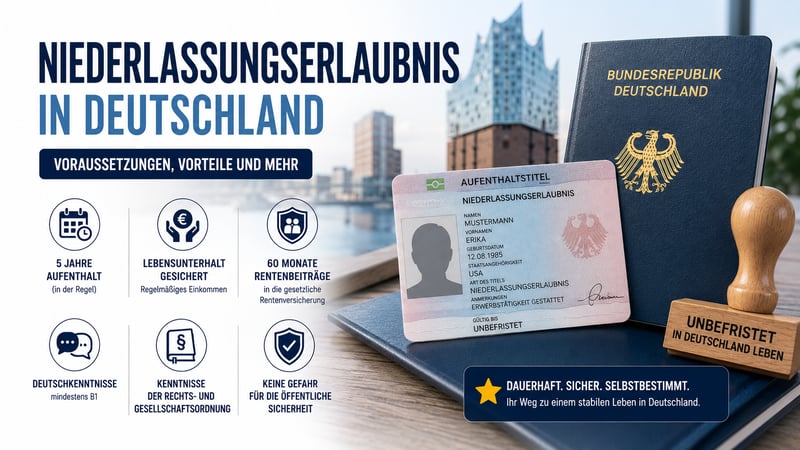
Voraussetzungen, Vorteile, gesetzliche Regelungen und Unterschiede zur befristeten Aufenthaltserlaubnis Einleitung Für viele Migranten, die in Deutschland leben und arbeiten, ist die Niederlassungserlaubnis einer der wichtigsten Schritte ihres Lebens in Deutschland. Viele Menschen leben jahrelang mit einer befristeten Aufenthaltserlaubnis und machen sich ständig Sorgen über: die Verlängerung ihres Aufenthalts, ihren Arbeitsvertrag, Änderungen der Gesetze, oder Entscheidungen der Ausländerbehörde. Die Niederlassungserlaubnis erlaubt es Menschen, dauerhaft und ohne zeitliche Begrenzung in Deutschland zu leben und zu arbeiten und bietet deutlich mehr Sicherheit. Entgegen der Vorstellung vieler Menschen wird die Niederlassungserlaubnis jedoch nicht automatisch erteilt. Die Ausländerbehörde prüft unter anderem: die finanzielle Situation, die Aufenthaltsdauer, Rentenversicherungsbeiträge, Deutschkenntnisse, mögliche Straftaten, sowie den Grad der Integration in die Gesellschaft. ⸻ Was ist eine Niederlassungserlaubnis? Die Niederlassungserlaubnis ist ein unbefristeter Aufenthaltstitel in Deutschland. Im Unterschied zur befristeten Aufenthaltserlaubnis: hat sie kein Ablaufdatum, ist nicht an einen bestimmten Arbeitgeber gebunden, und bietet deutlich mehr Sicherheit. Personen mit einer Niederlassungserlaubnis können: frei arbeiten, ihren Arbeitsplatz wechseln, ein Unternehmen gründen, und müssen sich in der Regel weniger Sorgen um die Verlängerung ihres Aufenthalts machen. ⸻ Unterschied zwischen Niederlassungserlaubnis und deutscher Staatsangehörigkeit Viele Menschen verwechseln diese beiden Begriffe. Die Niederlassungserlaubnis bedeutet: ein dauerhaftes Aufenthaltsrecht in Deutschland, aber die Person: besitzt noch keinen deutschen Pass, hat kein Wahlrecht, und gilt rechtlich noch nicht als deutscher Staatsbürger. Die Einbürgerung hingegen ist ein höherer rechtlicher Status, durch den eine Person offiziell deutscher Staatsbürger wird. ⸻ Gesetzliche Grundlage der Niederlassungserlaubnis § 9 Aufenthaltsgesetz (AufenthG) Gesetzestext „Einem Ausländer ist die Niederlassungserlaubnis zu erteilen, wenn er seit fünf Jahren die Aufenthaltserlaubnis besitzt, sein Lebensunterhalt gesichert ist, er mindestens 60 Monate Pflichtbeiträge oder freiwillige Beiträge zur gesetzlichen Rentenversicherung geleistet hat, Gründe der öffentlichen Sicherheit oder Ordnung nicht entgegenstehen, ihm die Beschäftigung erlaubt ist, er über ausreichende Kenntnisse der deutschen Sprache verfügt und er über Grundkenntnisse der Rechts- und Gesellschaftsordnung und der Lebensverhältnisse im Bundesgebiet verfügt.“ ⸻ Voraussetzung: Fünf Jahre Aufenthalt In den meisten Fällen muss eine Person mindestens fünf Jahre rechtmäßig in Deutschland gelebt haben. Die Art des Aufenthaltstitels spielt dabei eine wichtige Rolle, und manche Aufenthaltszeiten werden nicht vollständig angerechnet. Beispielsweise kann es vorkommen, dass eine Person im Rahmen der Dublin-Verordnung mehrere Monate von einer Abschiebung in ein anderes Land bedroht war. Wird die Abschiebung später ausgesetzt, beginnt die Berechnung der fünf Jahre häufig erst nach Abschluss des Dublin-Verfahrens. ⸻ Voraussetzung: Rentenversicherung Eine der wichtigsten Voraussetzungen ist: mindestens 60 Monate Beiträge zur gesetzlichen Rentenversicherung. Diese Beiträge werden normalerweise gezahlt durch: eine legale Beschäftigung, oder freiwillige Einzahlungen. ⸻ Voraussetzung: Deutschkenntnisse In der Regel muss der Antragsteller ein Sprachzertifikat auf Niveau B1 vorlegen. Die Ausländerbehörde möchte sicherstellen, dass die Person: selbstständig leben kann, und sich in die deutsche Gesellschaft integrieren kann. ⸻ Einkommen und finanzielle Situation Die Person muss nachweisen, dass sie: ein stabiles Einkommen hat, nicht vollständig auf Sozialleistungen angewiesen ist, und ihren Lebensunterhalt sowie den ihrer Familie sichern kann. ⸻ Können Leistungen vom Jobcenter problematisch sein? In vielen Fällen werden Anträge von Personen, die Sozialleistungen beziehen, strenger geprüft oder benötigen deutlich mehr Bearbeitungszeit. Inhaber einer Blue Card können die Niederlassungserlaubnis jedoch häufig schneller erhalten. ⸻ § 18c Aufenthaltsgesetz (AufenthG) – Niederlassungserlaubnis für Fachkräfte Gesetzestext „(1) Einem Fachkraft mit einer Aufenthaltserlaubnis nach den §§ 18a, 18b oder 18d ist ohne Zustimmung der Bundesagentur für Arbeit eine Niederlassungserlaubnis zu erteilen, wenn sie seit drei Jahren im Besitz einer Aufenthaltserlaubnis ist, sie mindestens 36 Monate Pflichtbeiträge oder freiwillige Beiträge zur gesetzlichen Rentenversicherung geleistet hat, die Voraussetzungen des § 9 Absatz 2 Satz 1 Nummer 2 und 4 bis 6, 8 und 9 vorliegen und sie über ausreichende Kenntnisse der deutschen Sprache verfügt. (2) Abweichend von Absatz 1 ist Inhabern einer Blauen Karte EU eine Niederlassungserlaubnis zu erteilen, wenn sie mindestens 27 Monate eine Beschäftigung nach § 18g ausgeübt haben und für diesen Zeitraum Pflichtbeiträge oder freiwillige Beiträge zur gesetzlichen Rentenversicherung geleistet haben und über einfache Kenntnisse der deutschen Sprache verfügen. Abweichend hiervon beträgt die Frist 21 Monate, wenn die Fachkraft über ausreichende Kenntnisse der deutschen Sprache verfügt.“ ⸻ Einfache Erklärung Fachkräfte mit einer Aufenthaltserlaubnis als Arbeitnehmer oder mit einer Blue Card können die Niederlassungserlaubnis schneller erhalten. Viele Fachkräfte können bereits nach drei Jahren eine Niederlassungserlaubnis beantragen. Inhaber einer Blue Card EU können oft schon nach 27 Monaten die Niederlassungserlaubnis erhalten. Mit guten Deutschkenntnissen verkürzt sich diese Frist sogar auf 21 Monate. ⸻ Auswirkungen von Arbeitslosigkeit Viele Migranten haben Angst, dass Arbeitslosigkeit kurz vor dem Antrag oder während des Verfahrens negative Folgen haben könnte. Eine kurze Phase der Arbeitslosigkeit ist meistens kein großes Problem, wenn die Person zuvor eine stabile berufliche und finanzielle Situation hatte. Allerdings können: langfristige Arbeitslosigkeit, starke Abhängigkeit von Sozialleistungen, oder steuerliche Probleme negative Auswirkungen auf den Antrag haben. ⸻ Ist ein Strafregister wichtig? Ja, sehr wichtig. Straftaten wie: Gewalt, Drogendelikte, Diebstahl, Betrug, Cyberkriminalität, oder die Nutzung gefälschter Dokumente können dazu führen: dass die Niederlassungserlaubnis abgelehnt wird, dass sich das Verfahren verzögert, oder dass Probleme bei der Verlängerung des Aufenthalts entstehen. ⸻ Vorteile der Niederlassungserlaubnis Die Niederlassungserlaubnis bietet viele Vorteile: ✔ Mehr Sicherheit beim Aufenthalt ✔ Mehr Freiheit auf dem Arbeitsmarkt ✔ Einfacherer Arbeitgeberwechsel ✔ Möglichkeit zur Selbstständigkeit ✔ Bessere Chancen auf Kredite ✔ Weniger Sorgen über Verlängerungen ✔ Einfacherer Weg zur Einbürgerung ⸻ Gefährliche Fehler Bestimmte Fehler können große Probleme verursachen: Steuerhinterziehung, fehlende Versicherungszahlungen, gefälschte Dokumente, Straftaten, falsche Angaben, oder Verstöße gegen das Aufenthaltsrecht. ⸻ Fazit Die Niederlassungserlaubnis ist einer der wichtigsten Schritte im Leben vieler Migranten in Deutschland und bietet mehr Sicherheit, Stabilität und Freiheit. Um die Chancen auf eine Niederlassungserlaubnis zu erhöhen: ✔ Deutsch ernsthaft lernen ✔ Steuern und Versicherungen regelmäßig zahlen ✔ Straftaten vermeiden ✔ Nur echte Unterlagen einreichen ✔ Den eigenen Aufenthaltsstatus regelmäßig prüfen In Deutschland ist die Niederlassungserlaubnis nicht nur eine Aufenthaltskarte, sondern auch ein Zeichen von Stabilität und rechtlichem Vertrauen des Staates. ⸻ ✔ Stabilität ✔ Sicherheit ✔ Langfristige Zukunft Diese drei Punkte gehören zu den wichtigsten Gründen, warum viele Migranten eine Niederlassungserlaubnis in Deutschland anstreben.

Straftaten, die zu Aufenthaltsproblemen oder zur Ausweisung aus Deutschland führen können ⸻ Einleitung Menschen machen Fehler, und viele lernen aus ihren Fehlern und versuchen, ihr persönliches und gesellschaftliches Leben zu verbessern. Manche Fehler gelten jedoch aus rechtlicher Sicht als Straftaten und können rechtliche Konsequenzen nach sich ziehen. Für Migrantinnen und Migranten in Deutschland kann dies nicht nur Geldstrafen oder Freiheitsstrafen bedeuten, sondern auch Probleme mit dem Aufenthalt, die Ablehnung einer Einbürgerung oder in schweren Fällen sogar die Ausweisung aus Deutschland. Die Angst davor, bestimmte Rechte zu verlieren, kann Menschen zwar davon abhalten, gesellschaftsschädliche Handlungen zu begehen. Gleichzeitig kann übermäßige und langfristige Angst jedoch auch negative Auswirkungen auf die psychische Gesundheit haben und persönliche sowie soziale Probleme verursachen. Dieser Artikel soll Migrantinnen und Migranten dabei helfen zu verstehen, welche Straftaten Auswirkungen auf ihre Einbürgerung oder ihren Aufenthalt haben können und in welchen Fällen sogar eine Ausweisung droht. ⸻ Was ist ein Führungszeugnis und wie wird es überprüft? Das Strafregister beziehungsweise der Nachweis über Vorstrafen heißt in Deutschland Führungszeugnis. Jede Person kann dieses Dokument bei der zuständigen Meldebehörde beantragen und nach Zahlung einer Gebühr Informationen über den eigenen strafrechtlichen Status erhalten. In vielen Situationen – zum Beispiel bei einer neuen Arbeitsstelle, bei der Verlängerung eines Aufenthaltstitels oder in anderen behördlichen Verfahren – verlangen Arbeitgeber oder Ausländerbehörden die Vorlage eines Führungszeugnisses. Wichtig ist jedoch zu wissen, welche Straftaten eingetragen werden und wie lange diese sichtbar bleiben. Grundsätzlich gilt: Solange keine rechtskräftige Verurteilung vorliegt, erscheint die Straftat nicht im Führungszeugnis. Wenn ein Strafverfahren also noch nicht abgeschlossen ist, wird kein negativer Eintrag angezeigt. Leichtere Strafen – zum Beispiel eine erstmalige Geldstrafe unter 90 Tagessätzen oder eine Freiheitsstrafe von weniger als drei Monaten – erscheinen im normalen Führungszeugnis häufig nicht, sofern keine weiteren Vorstrafen vorliegen. Schwerere Verurteilungen wie längere Freiheitsstrafen, Gewaltdelikte oder Sexualstraftaten werden dagegen normalerweise eingetragen und bleiben je nach Art der Straftat und des Strafmaßes über Jahre sichtbar. Besonders schwere Straftaten können sogar sehr lange im Strafregister verbleiben. ⸻ Wichtige Information zum System der „Tagessätze“ in Deutschland In Deutschland kann ein Gericht bei bestimmten Straftaten statt einer Freiheitsstrafe eine Geldstrafe verhängen. Die betroffene Person zahlt dann einen Geldbetrag anstelle einer Haftstrafe. Diese Geldstrafe wird in Deutschland in Tagessätzen berechnet. Anders als in vielen anderen Ländern ist die Geldstrafe nicht pauschal festgelegt, sondern richtet sich nach dem täglichen Einkommen der betroffenen Person. Grundformel Anzahl der Tagessätze × tägliches Einkommen = Höhe der Geldstrafe ⸻ Einfaches Beispiel Angenommen, das Gericht berechnet das tägliche Einkommen einer Person mit: 50 Euro pro Tag. Wenn das Urteil lautet: 30 Tagessätze ergibt sich folgende Rechnung: 30 × 50 = 1500 Euro Die betroffene Person muss also 1500 Euro Geldstrafe zahlen. ⸻ Zweites Beispiel Bei höherem Einkommen steigt auch die Geldstrafe. Beispielsweise: tägliches Einkommen: 100 Euro Urteil: 90 Tagessätze 90 × 100 = 9000 Euro Die betroffene Person muss in diesem Fall 9000 Euro zahlen. Wie bereits erwähnt, können Verurteilungen ab etwa 90 Tagessätzen erhebliche Auswirkungen auf Aufenthalt und Einbürgerung haben. ⸻ Welche Straftaten können den Aufenthalt beeinflussen? Nach § 53 Aufenthaltsgesetz: § 53 Aufenthaltsgesetz (AufenthG) Gesetzestext „Ein Ausländer wird ausgewiesen, wenn sein Aufenthalt die öffentliche Sicherheit und Ordnung, die freiheitliche demokratische Grundordnung oder sonstige erhebliche Interessen der Bundesrepublik Deutschland gefährdet.“ ⸻ Einfache Erklärung Wenn der deutsche Staat zu dem Ergebnis kommt, dass eine Person eine Gefahr für die Gesellschaft darstellt oder wiederholt gegen Gesetze verstößt, kann: der Aufenthaltstitel nicht verlängert werden, oder eine Ausweisung erfolgen. ⸻ Führt jede Straftat automatisch zur Ausweisung? Nein. Nicht jede Straftat führt automatisch zur Ausweisung. Die Ausländerbehörde berücksichtigt immer: die Schwere der Straftat, die Anzahl der Straftaten, das Verhalten nach der Tat, und die Gefahr für die Gesellschaft. Einige Straftaten gelten jedoch als besonders problematisch und können erhebliche Konsequenzen haben. ⸻ Gewaltdelikte Gewalttaten werden in Deutschland sehr ernst genommen. Dazu gehören beispielsweise: Körperverletzung, Schlägereien, Bedrohungen, häusliche Gewalt, oder Angriffe auf andere Personen. Solche Straftaten können sich negativ auf den Aufenthalt auswirken. ⸻ Praktisches Beispiel Zwei Personen geraten auf einer Feier oder auf der Straße in Streit, und eine Person schlägt die andere. Selbst wenn die Verletzung nicht schwer ist: kann die Polizei eingeschaltet werden, ein Strafverfahren eröffnet werden, und ein Strafregistereintrag entstehen. Wenn die betroffene Person Migrant oder Migrantin ist, kann dies später Probleme verursachen – etwa bei: der Verlängerung des Aufenthaltstitels, oder bei der Einbürgerung. ⸻ Drogendelikte und Aufenthalt Straftaten im Zusammenhang mit Drogen gelten in Deutschland als besonders sensibel. Beispiel Wenn eine Person: Drogen verkauft, größere Mengen besitzt, oder am Drogenhandel beteiligt ist, kann dies: zu einer Freiheitsstrafe führen, den Aufenthalt gefährden, oder sogar eine Ausweisung nach sich ziehen. Selbst kleinere Drogendelikte können Probleme bei der Einbürgerung verursachen. ⸻ Diebstahl Diebstahl bedeutet in Deutschland nicht nur schwere Kriminalität. Auch: Ladendiebstahl, Schwarzfahren, oder das Mitnehmen fremder Gegenstände können Straftaten darstellen. ⸻ Beispiel Eine Person verlässt ein Geschäft mit Waren, ohne zu bezahlen. Auch wenn der Warenwert gering ist: kann das Geschäft die Polizei rufen, ein Strafverfahren eingeleitet werden, und ein Eintrag im Strafregister entstehen. Manche Migrantinnen und Migranten denken: „Der Betrag war klein, also ist es nicht wichtig.“ Im Aufenthalts- oder Einbürgerungsverfahren kann selbst ein solcher Vorfall jedoch negative Auswirkungen haben. ⸻ Internetkriminalität und soziale Medien Auch das Verhalten im Internet kann in Deutschland rechtliche Konsequenzen haben. Beispiel Eine Person: bedroht andere über WhatsApp oder Instagram, beleidigt Menschen, oder veröffentlicht private Bilder anderer Personen. Dies kann dazu führen, dass: Strafanzeige erstattet wird, die Polizei Ermittlungen aufnimmt, und ein Strafregistereintrag entsteht. Screenshots von Nachrichten können dabei als Beweismittel verwendet werden. ⸻ Hassrede und extremistische Inhalte Deutschland reagiert besonders sensibel auf: Rassismus, Hassrede, Gewaltverherrlichung, und extremistische Inhalte. Beispiel Eine Person veröffentlicht in sozialen Netzwerken: Hassbotschaften gegen ethnische oder religiöse Gruppen, oder verbreitet extremistische Gewaltinhalte. Dies kann: eine Straftat darstellen, und erhebliche Probleme für Aufenthalt oder Einbürgerung verursachen. ⸻ Gefälschte Dokumente und falsche Angaben im Migrationsverfahren Eine der gefährlichsten Fehler für Migrantinnen und Migranten ist: die Verwendung gefälschter Dokumente, oder falsche Angaben gegenüber Behörden. ⸻ Beispiel Eine Person: legt gefälschte Gehaltsabrechnungen vor, verwendet ein gefälschtes Sprachzertifikat, oder macht falsche Angaben zum Familienstand. Wenn die Behörden dies entdecken: kann der Aufenthalt abgelehnt werden, ein Strafverfahren eingeleitet werden, oder der bestehende Aufenthaltstitel widerrufen werden. ⸻ Was tun bei einem Strafverfahren? In solchen Situationen gilt: Schreiben von Polizei oder Gericht nicht ignorieren, nichts ohne Beratung unterschreiben, und gegebenenfalls eine spezialisierte Anwältin oder einen spezialisierten Anwalt kontaktieren. Viele Menschen geraten durch Unachtsamkeit oder fehlende Reaktion in noch größere migrationsrechtliche Probleme. ⸻ Wichtige Warnung für Migrantinnen und Migranten Manche denken: „Wenn ich nur einmal einen Fehler mache, ist das nicht schlimm.“ In Deutschland können jedoch: Gesetzestreue, soziales Verhalten, und Vorstrafen über viele Jahre Auswirkungen haben auf: den Aufenthalt, die Niederlassungserlaubnis, und die Einbürgerung. ⸻ Fazit Ein Strafregister bedeutet nicht automatisch das Ende des Lebens in Deutschland. Dennoch kann die Missachtung von Gesetzen und Gerichtsverfahren schwerwiegende und langfristige Folgen haben. Für eine sichere Zukunft in Deutschland: ✔ Gewalt und Konflikte vermeiden ✔ Sich verantwortungsvoll im Internet verhalten ✔ Keine gefälschten Dokumente verwenden ✔ Deutsche Gesetze ernst nehmen ✔ Bei rechtlichen Problemen schnell handeln In Deutschland ist ein Strafregister nicht nur eine gerichtliche Angelegenheit – es kann auch die gesamte migrationsrechtliche Zukunft einer Person beeinflussen. ⸻ ✔ Rechtskonformität ✔ Verantwortungsbewusstsein ✔ Respekt gegenüber der Gesellschaft Diese drei Prinzipien bilden die Grundlage für ein sicheres und erfolgreiches Leben in Deutschland.

Häufige Fehler und Probleme mit der Ausländerbehörde ⸻ Einleitung Für viele Migranten, die in Deutschland leben, gehört die Verlängerung der Aufenthaltserlaubnis zu den stressigsten Phasen des Migrationslebens. Viele Menschen machen sich Sorgen über Fragen wie: Wird meine Aufenthaltserlaubnis verlängert oder nicht? Was passiert, wenn ich keinen Termin bei der Ausländerbehörde bekomme? Was passiert, wenn mein Arbeitsvertrag endet? Oder wenn meine Aufenthaltserlaubnis abläuft – bekomme ich rechtliche Probleme? Besonders in den letzten Jahren ist es aufgrund der starken Auslastung der Ausländerbehörden in vielen deutschen Städten schwieriger geworden, einen Termin oder überhaupt eine Antwort von der Behörde zu erhalten. Deshalb ist es sehr wichtig, die Regeln zur Verlängerung des Aufenthalts sowie die eigenen gesetzlichen Rechte zu kennen. ⸻ Was bedeutet die Verlängerung der Aufenthaltserlaubnis? Jede Person mit Migrationshintergrund, die in Deutschland lebt und arbeitet und noch keine Niederlassungserlaubnis oder die deutsche Staatsangehörigkeit erhalten hat, muss ihre Aufenthaltserlaubnis regelmäßig verlängern lassen. Der Grund dafür ist, dass die meisten Aufenthaltstitel in Deutschland zeitlich befristet sind. Daher muss vor Ablauf der Gültigkeit ein Antrag auf Verlängerung gestellt werden. ⸻ Wann sollte der Antrag gestellt werden? In vielen deutschen Städten wird empfohlen, den Antrag mindestens 2 bis 3 Monate vor Ablauf der Aufenthaltserlaubnis zu stellen. In einigen stark ausgelasteten Städten ist es jedoch sinnvoll, noch früher aktiv zu werden, da die Vergabe eines Termins mehrere Wochen oder sogar Monate dauern kann. ⸻ Was passiert, wenn man keinen Termin bei der Ausländerbehörde bekommt? Eine der häufigsten Fragen von Migranten ist, was passiert, wenn die Ausländerbehörde nicht rechtzeitig einen Termin vergibt. Wichtig ist, dass die Anfrage möglichst per E-Mail gestellt wird. Wenn eine Person vor Ablauf ihrer aktuellen Aufenthaltserlaubnis eine E-Mail zur Verlängerung sendet, gilt ihr Aufenthalt in vielen Fällen weiterhin als rechtmäßig, bis die Behörde den Antrag bearbeitet. Deshalb sollte man unbedingt: die gesendete E-Mail speichern, die automatische Antwort aufbewahren, Screenshots machen, und die E-Mail am besten auch ausdrucken und mit sich führen. Diese E-Mail kann als Nachweis dienen, dass der Antrag rechtzeitig gestellt wurde und man weiterhin auf eine Antwort wartet. Dadurch entstehen normalerweise keine rechtlichen Probleme. Selbst wenn der Termin erst nach Ablauf der aktuellen Aufenthaltserlaubnis liegt, gilt der Aufenthalt in vielen Fällen automatisch bis zum Termin als verlängert. Es reicht aus, das Schreiben oder die E-Mail mit Datum und Uhrzeit des Termins bei sich zu haben. ⸻ Verlust des Arbeitsplatzes und Verlängerung des Aufenthalts Eine der größten Sorgen von Menschen mit Arbeitsvisum in Deutschland ist die Frage, ob der Verlust des Arbeitsplatzes dazu führen kann, dass die Aufenthaltserlaubnis nicht verlängert wird. Wenn eine Person mit Arbeitserlaubnis über längere Zeit arbeitslos bleibt oder wiederholt ernsthafte Konflikte mit Arbeitgebern oder Kollegen hat, kann es passieren, dass die Aufenthaltserlaubnis nicht mehr verlängert wird. Verliert jemand jedoch kurz vor dem Termin zur Verlängerung seine Arbeitsstelle, bestehen oft weiterhin gute Chancen auf eine Verlängerung. Die Ausländerbehörde kann die bisherige Arbeitserfahrung der Person in Deutschland berücksichtigen und Zeit geben, um eine neue Arbeitsstelle zu finden. ⸻ Verlängerung der Aufenthaltserlaubnis für Studierende Bei Studierenden prüft die Ausländerbehörde in der Regel: ob die Person tatsächlich studiert, ob ein Studienfortschritt erkennbar ist, und ob ausreichende finanzielle Mittel vorhanden sind. ⸻ Häufiges Beispiel Wenn ein Studierender: über mehrere Semester keinen Fortschritt zeigt, oder faktisch nicht wirklich studiert, kann die Verlängerung der studentischen Aufenthaltserlaubnis schwierig werden. ⸻ Abgelaufene Aufenthaltserlaubnis und Gefahr des illegalen Aufenthalts Wenn eine Person: ohne Antrag auf Verlängerung in Deutschland bleibt, und keinen anderen gültigen Aufenthaltsstatus besitzt, kann ein illegaler Aufenthalt vorliegen. ⸻ Wichtige gesetzliche Regelung § 95 Aufenthaltsgesetz (AufenthG) Gesetzestext „Mit Freiheitsstrafe bis zu einem Jahr oder mit Geldstrafe wird bestraft, wer sich ohne erforderlichen Aufenthaltstitel im Bundesgebiet aufhält.“ ⸻ Einfache Erklärung Wenn die Aufenthaltserlaubnis einer Person abläuft und weder ein Verlängerungsantrag gestellt wurde noch ein anderer rechtmäßiger Status besteht, kann der Aufenthalt als illegal angesehen werden. ⸻ Häufige Fehler von Migranten Einige Fehler können große Probleme verursachen, zum Beispiel: zu spätes Beantragen eines Termins, Ignorieren von E-Mails oder Briefen, Einreichen unvollständiger Unterlagen, falsche Angaben, fehlende Krankenversicherung, oder mangelnde Aufmerksamkeit gegenüber dem eigenen Aufenthaltsstatus. ⸻ Was passiert, wenn der Verlängerungsantrag abgelehnt wird? In manchen Fällen kann die Ausländerbehörde: den Antrag ablehnen, oder weitere Unterlagen verlangen. In solchen Situationen sollte man: behördliche Schreiben niemals ignorieren, und möglichst schnell einen Anwalt oder eine Migrationsberatung kontaktieren. ⸻ Wichtiger Hinweis zu E-Mails und Unterlagen In Deutschland sind: E-Mails, behördliche Schreiben und Nachweise über eingereichte Unterlagen äußerst wichtig. Deshalb sollte man immer: Screenshots von E-Mails speichern, Kopien aller Unterlagen aufbewahren, und Datum sowie Uhrzeit der Antragstellung dokumentieren. ⸻ Wichtige Warnung für Migranten Manche Menschen denken: „Wenn die Ausländerbehörde nicht antwortet, ist das nicht mein Problem.“ In der Praxis ist es jedoch sehr wichtig: den eigenen Fall aktiv zu verfolgen, Unterlagen aufzubewahren und nachweisen zu können, dass der Antrag rechtzeitig gestellt wurde. Man sollte jederzeit beweisen können, dass der Verlängerungsantrag vor Ablauf der Aufenthaltserlaubnis eingereicht wurde. ⸻ Fazit Für eine erfolgreiche Verlängerung der Aufenthaltserlaubnis in Deutschland: ✔ Den Antrag frühzeitig stellen ✔ Vollständige Unterlagen vorbereiten ✔ Krankenversicherung und Arbeitssituation ordentlich halten ✔ Schreiben und E-Mails der Ausländerbehörde ernst nehmen ✔ Illegalen Aufenthalt vermeiden In Deutschland ist die Verlängerung der Aufenthaltserlaubnis nicht nur ein einfacher Verwaltungsakt, sondern ein wichtiger Teil der persönlichen Sicherheit und der migrationsrechtlichen Zukunft. ⸻ ✔ Ordnung ✔ Verantwortungsbewusstsein ✔ Rechtzeitige Nachverfolgung Diese drei Prinzipien bilden die Grundlage für ein erfolgreiches Management des Aufenthaltsstatus in Deutschland.